Author: Orla O'Keefe

Most of my day is spent playing with dogs. When they nap, I'm here working on my blog. You're welcome to reach out and connect with me.

3 Key Factors In Picking A Rescue Dog

3 Key Factors In Picking A Rescue Dog

Here are a few important steps to consider when picking a rescue dog.

1. Size of Rescue Dog

Every year, thousands of dogs are given away or abandoned because the puppy that someone bought grew to be bigger than anticipated.

This is an unacceptable mistake.

If you live in an apartment or a small home, do not get a Great Dane puppy hoping it will stay tiny. It won’t. If your building has a weight restriction, don’t get a dog that exceeds that restriction by a significant amount. A 30-lb Beagle might squeak by on a 25-lb limit. A 130-lb Saint Bernard will not. Please do not put a dog in this situation.

You should also consider the size of the dog, even if you have no such limitations. Do you want a big dog that can roughhouse with you?

Do you want a medium size rescue dog that fits in bed with you, but can also run around the yard chasing squirrels without you living in fear that it will break a brittle bone?

Maybe you want a lap dog that you can carry around with you.

These are all key questions to ask yourself before you adopt a rescue dog. Most people reading this site love dogs and have only the dog’s best interest at heart. But, even the strongest among us has taken that trip to the rescue thinking we want a Pom only to find that an irresistibly cute Rottweiler grabs a hold of our heart. If this happens, and you know that you can accommodate the Rottie, then go for it. But, if you can’t keep a big dog, stick with your original plan.

2. Activity Level of Rescue Dog

This one is tricky because it changes over the course of a dog’s life. Puppies that were tearing the house apart grow into calm, easy-going dogs.

Quiet puppies can turn into high-energy adults.

But, knowing the general disposition of the breed you’re choosing can help with this.

Remember that dogs are living beings with individual personalities. Take some time to think about what you want your relationship with your new dog to be:

  • Do you want to hike with her?
  • Are you looking for a Netflix and ice cream partner?
  • Do you like to walk the city with your buddy by your side?
  • Are you taking him off-leash to run the beach or in the countryside?
  • Do you want a little of all of the above?

Researching breeds can help. It’s not absolute since, though. There are lazy Terriers and high-energy English Bulldogs. But, in general, breed energy requirements are a good indicator.

If you are looking at a mixed breed, try to evaluate the dominant breed, if possible. If not, see if you can spend some time alone with the dog to get a better feel for how it behaves outside of the shelter. Remember, being in a rescue around multiple dogs, with new people coming in and out to meet them can change a dog’s behavior. Some will be scared, others overly excited. See how they are away from the excitement.

3. Age of Rescue Dog

The age of the dog you’re considering is key.

Are you high energy? Yes? A puppy may be right for you. Remember, no matter how energetic you are, puppies have a tremendous amount of energy to burn. This can lead to much mischief. If you’re not ok with losing a pair of shoes or two, go older.

Are you medium energy? Consider a dog between 1 and 3 years old. At this point, bigger dogs will have settled down considerably. Smaller dogs are still in late-puppyhood through the one or two year mark, so they’ll give you much playfulness, but the destructive period is mostly over.

Are you prone to long binge-watching sessions on the couch? Think a 20-minute walk is the height of your exercise life? Like a calm, quiet house? Consider adopting an adult or senior dog.

Now, don’t think that seniors or adults are not playful. They are. In fact, it’s not uncommon for senior dogs to regain a puppy-esque playfulness after leaving a rescue or shelter. But, those energy bursts are short-lived. A good walk with your new friend and she’ll be more than happy to lay on the couch with you for hours afterward.

Adults and seniors also come with the added benefit of knowing their disposition already. It’s tough to judge where a puppy’s personality will lead, but with a dog 3+, you have a good idea of who they are right away.
Why Microchips Alone Are Not Enough To Keep Pets Safe

Why Microchips Alone Are Not Enough To Keep Pets Safe

Keeping your dog safe is every dog lover’s number one priority. 

Countless books, websites, and training guides stress the importance of making sure your pet always has their ID tags attached to their collar. And, most recommend microchipping your dog. 

Why Microchip Your Dog?

A tiny chip, about the size of a grain of rice, is injected under the skin around your dog’s neck (between their shoulders). This chip can be scanned by veterinarians, shelters, rescues, and other doggie allies. 

Each chip has an electromagnetic transponder with a code – kind of like the barcode you see on products – that is registered with different lost pet finding services. Home again and Avid are two of the biggest. Before putting the chip into your dog, it is scanned, validated, then scanned after implanting in your dog’s skin to make sure it worked. 

Because of it’s ability to be easily read and help identify your lost dog, microchipping has become very popular. And, it sounds like a great idea. 

The Shortcomings of Microchips

The biggest reason that microchips fail your dog is that they need to be scanned in order to work. 

If your pup gets lost, then is picked up by animal control, a helpful neighbor, or simply wanders into a friendly shelter, this is great. They can be scanned, and you’ll be notified quickly that your dog has been located. 

An Unfound Dog Remains Unfound

However, if you’ve lost a dog, you know that the chances of them being randomly found is just short of a miracle. 

Dogs can roam enormous amounts of territory in a short time. 

Couple that with the dangers presented by:

  • High traffic areas
  • Dog thieves 
  • Countless places to hide
  • Vast amounts of wooded areas
  • Speeding, Texting-and-Driving drivers

and any hope that your dog will be found and scanned diminishes greatly. This is why microchips fail more often than they succeed. 

GPS Trackers Are Better Than Microchips

Now, imagine your dog slips out of your yard. You’re away at work. When you come home, you can’t find your furbaby!

Instead of drawing up Lost Dog posters, or posting your pup’s info on social media… or praying that they’ll be found and scanned, imagine if there was a way to know exactly where they are…

Now there is: GPS Dog tracking device. 

It can:

  • Track your pet’s location – accurate to 10ft!
  • Monitor your pet’s activity level – know if they’re on the move
  • Read your pet’s body temperature – if they escape in the cold, or if they’ve been injured, you’ll know if they’re body temp is in the healthy range 
  • Transmit your dog’s location, including turn-by-turn directions, to your cellphone

7 Great Hypoallergenic Dog Breeds That Won’t Make You Sneeze

7 Great Hypoallergenic Dog Breeds That Won’t Make You Sneeze

Just because you are allergic to fur doesn’t mean that you have to miss out on owning a fluffy friend. There are hundreds of Hypoallergenic Dog Breeds, here are a few of our favourites.

Bichon Frise

Don’t be deterred by the soft puffy coat. These small marshmallows do not shed and are jolly and simple to train. The Bichon Frise is perfect for a family needing a little, cheerful dog as an easygoing company.

Schnauzer

These shed-less pups are excellent for an owner who loves to be the center of focus — or a child who adores playing “Follow the Leader.” Schnauzers love individual attention,  so expect to have a pal by your side at all times  They do need a firm hand, to balance their protective mood and his tenacious, filled with energy attitude. Schnauzers come in three sizes,  giant, standard and tiny

Yorkshire Terrier

Why is this strain a favored among allergy sufferers? These cute little dogs grow hair instead of fur. Hair has an extended development cycle in this strain, meaning that they shed less often. The only drawback is that these guys that are are going to need continuous dressing to prevent their hair from becoming a matted mess. Having a groomer shave them in a pup cut can supply a temporary low-care option.

Shih Tzu

Dog lovers with allergies shouldn’t be deceived by this strain’s long, glossy locks; in reality, the Shih Tzu sheds very little. Dog owners have two options for hairstyles.  Keeping the jacket keeping it long or short into a “puppy” cut. However, keeping it long comes at a cost: the coat needs regular combing and daily care.

Poodle

The poodle is cherished by many allergy sufferers. Poodles are famously smart and loyal breeds. This strain is also blessed with a non-shedding coat. The poodles tight and fluffy curls tend to maintain dander, keeping it off the floor and bed. Like many of other hypoallergenic dog breads, poodles need regular baths and haircuts.

Italian Greyhound

Perfecto! This small Italian breed has a layer has a very thin layer of hair, so while he just sheds, it is not difficult to keep him clean of allergens. The strain does not need a large lawn, and is quite lively and loyal. They are  quite sensitive to cold though, so this is not a great strain for a family living in a chilly climate.

Portuguese Water Dog

The Portuguese water dog made its way to the White House. After extensive research the Obamas had to find a strain that wouldn’t irritate family and staff members allergies. Like the poodle, this pooch has a low shedding speed due to his “curled hairdo, which keeps dander from accumulating on furniture, garments, upholstery, and the floor.

12 Dog Breeds Whose Names You’re Probably Pronouncing Wrong

12 Dog Breeds Whose Names You’re Probably Pronouncing Wrong

Like certain human names, some dog breeds are quite difficult to pronounce. And when you mispronounce one? The worst! But Nuzzle is here to help. Here are 12 dog breeds you’re most likely pronouncing wrong – and the correct way to say them.

Shih Tzu

One of the most widely mispronounced dog breed names is this pint size, fluffy breed. While you may have heard it pronounced “s**t sue” it’s actually pronounced shee-dzoo.

Bichon Frise

Another commonly mispronounced breed is this adorable ball of fur. There are technically two ways to pronounce this one: Bee-shon Freeze or Bee-shawn Free-zey, the latter being the traditional French pronunciation.

Dogue de Bordeaux

This French Mastiff’s name looks more difficult than it actually is. “Dogue” is pronounced like “Vogue” and “Bordeaux” is pronounced like the wine. So, it’s Dohg-duu-Bor-doe.

Norwich Terrier

Though this may not seem too difficult to pronounce, there are actually two different ways to say this cuties name. Nor-Witch or Norridge (the traditional English version) are both correct.

Bernese Mountain Dog

This one isn’t so much about the spelling but more about the fact that it sounds similar to people from “Burma”. Bernese Mountain Dogs are actually from the Swiss Alps and their name is pronounced like “Bur-Nees” not “Bur-Mees”.

Kuvasz

In this Hungarian sheep herding dog’s name, the “z” is silent, so it’s pronounced Koo-vah”.

Petit Basset Griffon Vendeen

Just looking at this name may make you want to bury your head in the sand – or at least avoid saying it at all costs! But with enough practice, you’ll become an expert in no time. Just keep practicing, Puh-tee Bah-say Gree-fohn Von-day-uhn over and over again!

Portuguese Podengo Pequeno

The last word may throw people off on this breeds name as it’s actually pronounced Por-cha-geez Poe-den-go Pe-ken-o – not “Pe-ken-yo”.

Lagotto Romagnolo

Hailing from a sub-region in Italy, this Italian dog’s name is pronounced La-got-toe Rrrro-man-yolo and means “Lake Dog of Romagna”.

Berger Picard

Though it looks like “Burger Picard”, the correct way to pronounce this French herding dog’s name is Bare-zhay Pee-carr.

Cesky Terrier

This interesting-looking pup bears a resemblance to Schnauzers and originated in Czechoslovakia. The correct way to pronounce their name is “Chess-Key Terrier”.

Pekingese

If you pronounce this long-haired beauty Pee-kuh-neez, you’re technically right. But, there is a lesser-known version – Pee-king-eez – that is often considered incorrect. However, this breed was named after the Chinese capital city “Peking” (now known as Beijing), so that version is perfectly acceptable.

So next time you spot one of these pups, impress your friends and fellow dog lovers with the correct pronunciation of these dog breeds!

13 Dog Breeds That Require The Least Amount Of Exercise

13 Dog Breeds That Require The Least Amount Of Exercise

Most dogs are known for their high energy or affinity for long walks. Some breeds, however, don’t fit into that mold. Introducing the 13 dog breeds that require the least amount of exercise.

Bulldog

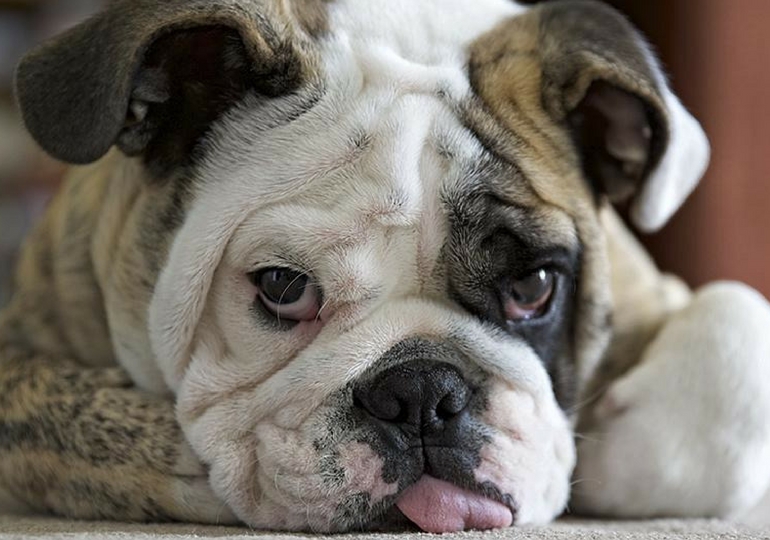
Probably the most well-known less-active breed is the Bulldog. Though athletic, the Bulldog is notorious for wanting no part in long walks or exercises. Their spot is on the couch and they’re perfectly happy there.

Chow Chow

No need for long hikes or walks for this breed. The Chow Chow is perfectly fine just hanging out with their humans all day.

French Bulldog

Similar to their counterpart the Bulldog, the French Bulldog doesn’t require a lot of exercise. While they love to play, they’d prefer to chill out with you on the couch.

Chinese Crested

This hairless breed may be more work to take care of than other breeds thanks to its non-existent coat, but they actually have quite a low need for exercise. Chinese Crested’s are also loving and friendly companions.

Bullmastiff

You may be fooled by the Bullmastiff’s size, but this breed is calm-natured and doesn’t require a ton of exercise. They were, however, bred to be guard dogs so they are constantly alert.

Bichon Frise

A daily walk is all this breed needs. The Bichon Frise would rather hang out with their humans anyway.

Miniature Pinscher

This small, adorable breed does not require a lot of exercise and is the perfect family companion – especially those who prefer nights in over nights out.

Shih Tzu

Shih Tzu’s, though playful and alert, were bred as companion dogs. So it’s in their nature to be around their humans at all times.

Pomeranian

Pomeranian’s weren’t always as small as they are today. In fact, they were bred to be smaller so they can fit in their owner’s laps. And now, they prefer to hang out with their human’s than play around outside.

Japanese Chin

Actually hailing from China, the Japanese Chin is a pint-sized breed with a playful personality. However, they don’t require much exercise and prefer to chill out with their owners.

Chinese Shar Pei

This wrinkly-faced breed prefers lounging to running and will be a great pup for Sunday’s spent on the couch.

Sussex Spaniel

Although they were originally bred as hunting dogs, the Sussex Spaniel has strayed away from their former responsibilities and is now known as a slow-paced dog that loves to lounge around all day.

Irish Wolfhound

Despite their size, the Irish Wolfhound doesn’t require a ton of exercise. They were originally bred as war dogs, but today they are family companions that enjoy just hanging out with their humans.

Pickles: The Pup That Saved The World Cup

Pickles: The Pup That Saved The World Cup

The History Making Pup

In 1996, England was preparing to hold the World Cup, which to the English, was kind of a big deal. Especially because they had a feeling they might win—which they did—so you can imagine how bummed they were when a thief stole the World Cup trophy just four months before the matches started.

The entire country immediately went into a frenzy to avoid international embarrassment and find the missing cup. After months of searching, and a failed ransom request Pickles, a curious collie saved the day by finding the lost trophy.

While on a routine walk, the pup sniffed something out in the bushes and wouldn’t let up. When Pickle’s owner took a look at what the pup had found, he discovered the missing World Cup!

In the aftermath of finding the Cup, Pickles meteoric rise to fame began. The press lavished him with attention, quickly becoming known as the hero dog that saved the Works Cup. The country even threw a banquet in Pickles honor.  Awarding him a bone and a £5,000 check —archive footage shows the check being shoved into his face, so we hope it was cashed by his master and not chewed to shreds.

Finding the world cup changed Pickles life forever. Once an ordinary dog, he became known as the pup that saved the world cup.  He starred in feature films, The Spy with the Cold Nose, and appeared on Magpie, Blue Peter and many other TV shows. The country named Pickles Dog of the Year.  A title that came with a year’s free supply of food from Spillers. There were offers to visit Chile, Czechoslovakia, and Germany.

Meet Cullen And Romulus, The World’s First Set Of Puppy Identical Twins

Meet Cullen And Romulus, The World’s First Set Of Puppy Identical Twins

We all know puppies are adorable. It’s hard to resist those fluffy coats and unbelievably cute faces. But, have you ever looked at two puppies and thought to yourself, “Wow, they look exactly alike?” Your eyes may no longer be deceiving you. For the first time in history, two puppies were born identical twins.

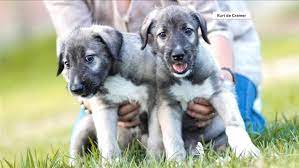
The Irish Wolfhound twins were delivered via C-section with their five litter mates by Kurt de Cramer of Rant en Dal Animal Hospital in South Africa. The two puppies were attached by their umbilical cords to the same placenta – not a common occurrence during the procedure. The twins, named Cullen and Romulus, had some slight differences in their white markings but blood tests confirmed that they were, in fact, identical twins.

Why the slight difference in markings? Though the twins share the same set of genes, each gene will be influenced by indirect environmental cues, changing how each gene is expressed. So, like human identical twins, Cullen and Romulus won’t look exactly alike.

Although it is not impossible, identical twins are very rare for non-human species.

Many people have suspected that domestic dogs could be identical twins, but Cullen and Romulus were the first confirmed case. There could certainly be undocumented cases of non-human identical twins, especially since scientists have only genetically tested a small sample of wild and domestic animals. The rarity could also be because two organisms living in the same placenta don’t receive the same amount of nourishment. In the wild, that could mean only one animal survives.

Although Cullen and Romulus were born slightly smaller and lighter than their siblings, the now twelve-week-old pups are thriving and enjoying life with the rest of the pack.

Do You Need a Pet Halloween Costume?

Do You Need a Pet Halloween Costume?

Guide to a perfect pet Halloween costume

We all love the idea of dressing up our pets for Halloween or for various other parties.  After all, if people can dress up in various costumes for the occasion then it only makes sense for our pets to do the same, right?

But that doesn’t mean that every pet should have a Halloween costume. While some pets might be fine with wearing something for the holiday, you should be very cautious when trying to get a good costume ready.

Some pets might be easily agitated by the added weight that comes from a costume. Heavy costumes can be bothersome to many pets.

Also, there are times when some parts of a pet Halloween costume might have small parts or attractive things that pets might chew on. This could be harmful to them in some cases.

There might also be times when your pet may be too active. A pet that can run fast and make sudden movements will not need a costume. Any pet that is too easily agitated by sudden actions might not need a costume either. This is important to see with regards to how a pet behaves and how it responds to a costume.

What If You Want a Pet Haloween Costume?

If you do wish to have a Halloween costume for your pet, it helps to see if your pet will be comfortable with it. It is typically a good idea to allow your pet to have a bit of time to wear it to get used to that costume. This is so there won’t be any unusual mishaps on Halloween.

Also, make sure the costume is one that is not going to easily slip off or be uncomfortable for a pet to wear. Anything that is rough or otherwise hard on a pet’s body will certainly not be something for the pet to wear.

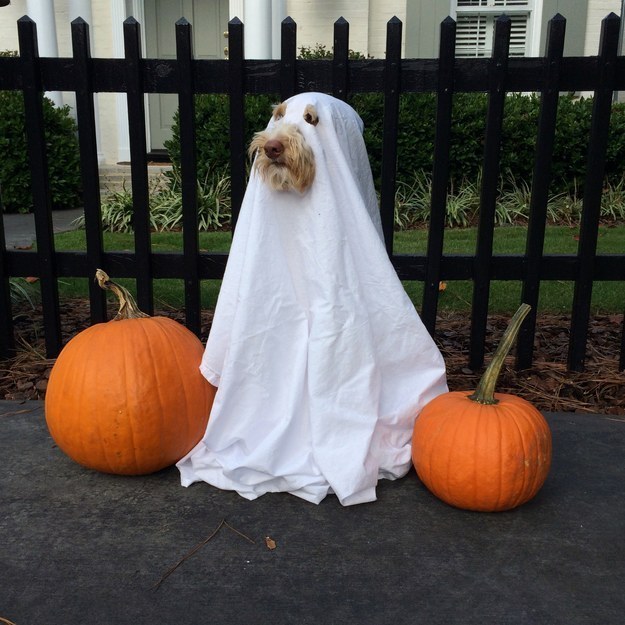
Try not to be overly predictable either. It’s often easier to spot your pet if you have a costume for it that is distinguishable. After all, there are only so many dogs in hot dog costumes out there.

A get pet costume will certainly stand out when used right. Be sure to think carefully about whether your pet could actually enjoy wearing.  The last thing you want for Halloween is to bear with your pet not cooperating with a costume.

Top Cat Instagram Accounts To Follow For Cat Lovers

Top Cat Instagram Accounts To Follow For Cat Lovers

If your desktop, mousepad, phone background and walls are adorned with cats then it’s time to up your cat Instagram accounts following to include the cutest cats in town. We’ve gathered the top Instagram accounts for cat lovers; get ready, we’re about to lay on the cuteness.

Top Cat Instagram Accounts to Follow

From the streets of Brooklyn, Princess Monster Truck. Would you mess with this kitty after dark? We didn’t think so.

  1. Nala the Selfie Queen. We’re pretty sure it doesn’t get any cuter than this princess!

2. Pudge from the Midwest loves chasing mice and eating apple pies.

3. Snoopybabe with the Short Hair

4. Tard the Grumpy Cat

5. Sam has Eyebrows

6. Hamilton the Hipster

7. Lil’ Bub the Lady

Why Do Cats Like Boxes?

Why Do Cats Like Boxes?

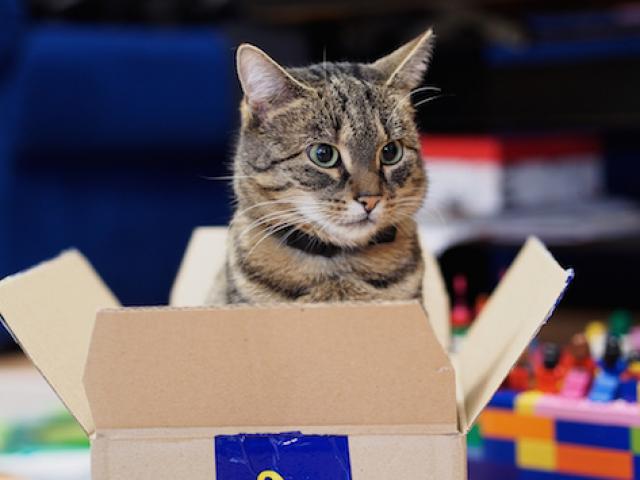
Does your cat love playing hide and seek in empty boxes?

Do you buy her expensive toys only to find her innately more interested in an empty Amazon box?

Scientists Explain Why Cats Like Boxes

If you are worried that your cat’s obsession with empty boxes is unhealthy, don’t worry. It’s completely normal. 

Cats are predators. In the wild, they are excellent hunters. Unlike dogs who can both hunt and scavenge, cats rely on their hunting skills. 

One theory is that because of this hunting instinct, cats are attracted to boxes because it gives them a great place to hide. They are hidden but can still sense prey. 

Your indoor cat probably hasn’t hunted anything real in it’s life. But, the need to hunt is still in their DNA. Hunting can become chasing a ray of light, batting around a toy mouse, or playing with string. 

Boxes offer them a great vantage point. It also encloses them, making them feel protected. 

Ideal Napping Spots

Other than hunting, cats are born sleepers. 

Your cat probably loves nothing more than taking a long nap in a safe area. For many, that can be under the bed or in a closet. But, for many cats, boxes offer them the ideal nap area. They’re enclosed, warm, and invisible to predators. 

Time Out

In times of stress, your cat might seek out a box for some temporary relief. Loud noises, guests, a new puppy, and the vacuum can all send your cat to seek shelter. Boxes keep the bad things out of view, while helping them hide in a warm spot. 

Ah, Leave Me Alone!

Ever had your cat freak out mid-petting and dart off into hiding? Cats don’t react well to stress. Even in seemingly calm situations, they can get spooked. 

They will head for safety in an instant. 

Because boxes provide the ultimate safety, they’re a cat’s first choice. They feel invisible, and the walls provide a nice layer of protection. 

Keep Them Safe

Box living is fine, as long as they don’t get out of your house and decide to hide in the wrong box. Because cats are knowing to get themselves lost in boxes destined for the dump truck, it’s important to keep track of them carefully.

Want to Contact Me?

Hellonuzzle