Author: Orla O'Keefe

Most of my day is spent playing with dogs. When they nap, I'm here working on my blog. You're welcome to reach out and connect with me.

Top Cat Instagram Accounts To Follow For Cat Lovers

Top Cat Instagram Accounts To Follow For Cat Lovers

If your desktop, mousepad, phone background and walls are adorned with cats then it’s time to up your cat Instagram accounts following to include the cutest cats in town. We’ve gathered the top Instagram accounts for cat lovers; get ready, we’re about to lay on the cuteness.

Top Cat Instagram Accounts to Follow

From the streets of Brooklyn, Princess Monster Truck. Would you mess with this kitty after dark? We didn’t think so.

  1. Nala the Selfie Queen. We’re pretty sure it doesn’t get any cuter than this princess!

2. Pudge from the Midwest loves chasing mice and eating apple pies.

3. Snoopybabe with the Short Hair

4. Tard the Grumpy Cat

5. Sam has Eyebrows

6. Hamilton the Hipster

7. Lil’ Bub the Lady

Why Do Cats Like Boxes?

Why Do Cats Like Boxes?

Does your cat love playing hide and seek in empty boxes?

Do you buy her expensive toys only to find her innately more interested in an empty Amazon box?

Scientists Explain Why Cats Like Boxes

If you are worried that your cat’s obsession with empty boxes is unhealthy, don’t worry. It’s completely normal. 

Cats are predators. In the wild, they are excellent hunters. Unlike dogs who can both hunt and scavenge, cats rely on their hunting skills. 

One theory is that because of this hunting instinct, cats are attracted to boxes because it gives them a great place to hide. They are hidden but can still sense prey. 

Your indoor cat probably hasn’t hunted anything real in it’s life. But, the need to hunt is still in their DNA. Hunting can become chasing a ray of light, batting around a toy mouse, or playing with string. 

Boxes offer them a great vantage point. It also encloses them, making them feel protected. 

Ideal Napping Spots

Other than hunting, cats are born sleepers. 

Your cat probably loves nothing more than taking a long nap in a safe area. For many, that can be under the bed or in a closet. But, for many cats, boxes offer them the ideal nap area. They’re enclosed, warm, and invisible to predators. 

Time Out

In times of stress, your cat might seek out a box for some temporary relief. Loud noises, guests, a new puppy, and the vacuum can all send your cat to seek shelter. Boxes keep the bad things out of view, while helping them hide in a warm spot. 

Ah, Leave Me Alone!

Ever had your cat freak out mid-petting and dart off into hiding? Cats don’t react well to stress. Even in seemingly calm situations, they can get spooked. 

They will head for safety in an instant. 

Because boxes provide the ultimate safety, they’re a cat’s first choice. They feel invisible, and the walls provide a nice layer of protection. 

Keep Them Safe

Box living is fine, as long as they don’t get out of your house and decide to hide in the wrong box. Because cats are knowing to get themselves lost in boxes destined for the dump truck, it’s important to keep track of them carefully.

5 Reasons To Adopt A Senior Cat

5 Reasons To Adopt A Senior Cat

Senior Cats are one of the least appealing pets available for adoption. Most people will choose a dog or else a cute kitten. Senior cats are in desperate need of adoption.

  1. Avoid the Kitten Crazies

Yes, kittens are cute. Endless Youtube channels and social media memes have profited from this fact. But, that cuteness comes at a cost.

They have ceaseless energy.

Kittens make messes, they get into dangerous situations while you’re away, and they can wreak havoc, especially if they are paired with other kittens.

If you are in an apartment, don’t have a lot of time to devote to training (as much as you can train a kitten), or you are past the stage in life where you want to be jolted awake at 3am by the shattering of your coffee mugs and fine china, you should consider a senior cat.

  1. You Know a Senior’s Temperament

With dogs, we can usually tell their personality in puppy hood. Sure, they mellow a bit with age, but there aren’t drastic behavioral changes.

Not so with our feline friends.

Cats can undergo dramatic changes in personality from kitten-hood to their adult years.

If you have small children, it is helpful to know if that playful, cute kitten will grow up to not be a “people person,” or worse yet, be bad with children and their sometimes overly-rough-in-a-living-way ways.

With a senior, what you see is what you get. You can actually select a cat companion that matches your personality and lifestyle, with little chance for surprise.

  1. Senior Cats Are Easier to Train

Adult cats have a much longer attention span than kittens. They also have more impulse control and less manic energy. This makes them easier to train, which makes your life easier.

  1. No Home Alone Woes

Senior and adult cats are less apt to get into trouble when left home alone. They are self-sufficient, and are not likely to give in to the dangerous mix of boredom and kitten-energy bursts. This means you can be sure you won’t come home to clawed couches, and your kitchen counter will not be left in disarray.

  1. You Save Their Lives

Like senior dogs, senior cats have little chance of getting out of shelters when they are surrenders by their owners, or picked up off the street. In fact, they have less of a chance because most “shelters” give dogs a longer stay of execution than they do cats.

By adopting an adult or senior cat, you are saving their lives, and helping the next homeless cat in line find a safe place by freeing up space in the shelter or rescue group.

12 Wonderful Things Humans Have Done For Animals In 2016

12 Wonderful Things Humans Have Done For Animals In 2016

Whether 2016 was a great year for you or not, there is no denying that some pretty amazing things happened. It just so happens that 12 of these awesome things were animal related. Here are 12 wonderful things humans did for animals this past year.

Goat with anxiety wears duck costume to make her feel safe:

When Polly’s owner bought her a duck costume, she didn’t realize it would help with Polly’s major anxiety problems – and make for one of the cutest pictures ever.

Pup lives in his own Harry Potter-like room:

After moving to a new house, the Chihuahua’s owner decided to create a space for him. She turned the cabinet under the stairs into his very own bedroom – furnished with a dresser, tiny bed, and lots of snacks. Just like Harry Potter.

Chicken on bed rest gets to watch nature documentaries:

After an injury, a chicken, named Strawberry, was put on bed rest. So she wouldn’t get bored, her owners set up an iPad with shows for her to watch. Her favorites were nature documentaries and shows with other chickens.

Dog receives his own letters:

Pippa is obsessed with getting the mail for her family. So, if there isn’t any mail that day, her mailman will write her a letter she doesn’t go home empty pawed.

Cat gets wrapped in Christmas bandages:

When Missy was bitten by a snake, she had to be hospitalized. Her nurses wanted to make her time there more festive, so they put Christmas-colored bandages on her.

Pup takes last walk on beach with hundreds of new friends:

Walnut’s dad had to make the difficult decision of putting him down. He wanted to make Walnut’s last walk memorable, so he asked people on Facebook to join them. To his surprise, hundreds of people showed up!

Mice are given their own storefronts:

Thanks to a group of artists, some mice got to experience their very own trip to the mall. The artists wanted to build some storefronts with mice in mind. The mice definitely approved.

Dog that was abused gets stuffed animals that look just like her:

When Justice was rescued, her mouth and legs were bound with electrical tape, leaving her with a scar across her snout. The shelter that saved her wanted to raise awareness and money to stop animal abuse, so they created a line of stuffed animals modeled after her.

A family celebrated Christmas early for their dying dog:

After Scooby’s family realized he wouldn’t make it to Christmas, they decided to celebrate it early. They even decorated the house and gave him presents!

Shelter dogs get treated to Puppuccinos:

One shelter decided to treat their pups to some afternoon Puppuccinos. It gave the dogs something to look forward and improved their chances of getting adopted.

Man surprises cat by dressing up as his favorite toy:

A man decided to surprise his cat and dress up as his favorite shark toy. The cat seemed more confused than surprised, but it was a nice gesture to say the least.

Man surprises dog by dressing up as his favorite toy:

And finally, one of the top trending animal stories of 2016. Unlike the cat with the shark toy, Jolena was very excited when her dad surprised her dressed up as her favorite Gumby toy.

5 Best Dog Breeds For Apartment Renters

5 Best Dog Breeds For Apartment Renters

Space the final frontier, or the lack of space. I lived in a 600 square foot apartment for 5 years. They are 5 of only 8 years of my entire life that I didn’t have a dog. I’ve always had Golden Retrievers as an FYI. I always thought that you needed to have a ton of space to have a dog in an apartment but there are many dog breeds that thrive in apartments.

In fact, all dogs can become used to apartments, if you are able to give them the exercise they need and crave. We at Nuzzle do however think it is a little easier for some dogs to become used to the smaller space. These are our Top 5 dog breeds for apartment renters.

5 Best Dog Breeds for Apartment Renters

  1. Shih Tzu

Shih tzus are one of the best dogs for apartment living, even in very small apartments.

Their tiny body size and sweet temperament make them ideal apartment dwellers.

They are friendly, so this makes them one of the least yappy of the small breeds, a huge issue if you have neighbors that complain about barking.

Shih tzus do need a lot of maintenance for their hair, but other than that, they’re typically happy with one long walk per day.

  1. Great Dane

A dog that huge in an apartment?

Yes!

Great Danes are huge, powerful dogs, but they are true gentle giants. The breed is protective, but friendly. And, because they seem to be aware of their size, they only bark when necessary.

Great Danes are easily trained, and love a good walk, but don’t need an inordinate amount of exercise. This makes them a great apartment companion.

Note: if you have a very small apartment, the Great Dane is a bad option. Their size (100 – 140+lbs) requires that they have enough space to spread out a bit, and close-quarters living is not for them. But, if you have an average or large place, the Great Dane will thrive.

  1. Greyhound

Another big dog on the list.

Though they’re known for racing, most greyhounds just need a long walk and a place to lay down.

IF you adopt an adult or senior Greyhound, especially one rescued from a dog track, they’ll be thrilled to sprawl out on your couch, living the good life.

And, the best news for apartment living: Greyhounds are not big on barking.

Laid Back Dog Breeds

  1. Basset Hound

Basset Hounds are much more laid back than their Beagle cousins. Their larger size (they can be 70+lbs, though they’re not very tall), and work-only-when-necessary temperament slows them down and makes them great apartment dogs.

The Basset Hound does need a solid walk every day, not only for mental health, but because this breed can become very over-weight if you’re not careful.

But, if you’re looking for a Netflix-binge partner, look no further than the laziest of all hounds.

  1. Pug

The tiny pug seems made for apartment living. They’re small, loyal, and not yappy. The pug is known to be extremely loyal, and may follow you around your apartment constantly.

They can live in even the smallest of apartments, comfortably.

As with all breeds, the pug appreciates a daily walk, but is going to be thrilled when you get home and head for the couch.

Teaching Your Puppy to Walk on a Leash

Teaching Your Puppy to Walk on a Leash

Bringing a new dog into your home is one of the most exciting, rewarding things you can do. If they’re a rescue, they’ll surely reward your kindness with love, affection, and years of zany antics. If you’ve gotten a puppy or young adult dog (or an adult that was untrained), then getting them to walk on a leash can be challenging.

There is a small school of thought that preaches the belief that dogs walking on a leash should be allowed to roam freely, smelling and barking and playing how they like. There are other who believe that off-leash walking is possible, even in the city.

Don’t buy into it.

Why you Must Teach Your Dog To Walk On A Leash

The reality is that we need our dogs well behaved on the leash, not to satisfy our egos of being a good dog trainer, but instead to:

  • Keep our dogs safe – walking off leash in a city is dangerous, no matter how well trained or well behaved your dog is. Unless you have also trained all pedestrians, bike riders, skateboarders, and drivers, then your dog is at risk
  • Keep other safe – if you have a big dog, it doesn’t take much for them to jump up and knock someone down while out on a walk. This can lead to lawsuits, and your dog will be punished. You also don’t want to be pulled down by an unruly pup. That puts you both at risk for serious injury
  • Bond with your dog – Teaching your dog to walk calmly next to you no matter where you are can expose them to a myriad of fun things: dog parks, trips to the stores that allow dogs, adventures in the city, meeting other dogs at charity events and fundraisers, runs on the beach, etc.

But, how do you get an energetic, monkey-minded dog, especially a puppy, to behave while walking on leash?

Training A Puppy To Walk Good

  1. Don’t Let Their Energy Dictate the Pace

The biggest mistake dog owners make on the walk starts before the leash.

Dogs, especially puppies, become very excited at the sight of their leash. It means walks! Freedom! Friends and cars and people and all the cool smells the wind brings!

They’ll jump. They spin in circles. They’ll run around.

And, what do most of us do? We think it’s cute, leash them up, then start the walk. Before we even get out of the door they’re pulling us like a Clydesdale.

Calm Your Puppy Before The Walk

First, don’t start the walk until they’re calm. This will take patience on your part and theirs. You have to be willing to wait them out. Teach them to sit and wait calmly (it’s an excited calm, but it’s not jumping and running and spinning).

Once they’re calm, attach their leash/harness. Now, this will not happen on the first attempt. They’ll feign being relaxed, then get wild as you begin the leashing process. Back off, re-start. Keep going until they’re calm.

This one challenge will remove many of the behavior problems that occur on the walks. By putting your dog in a calm mental state, you teach them that – yeah, walks are cool, but they’re more fun when we do them as a team.

  1. Choose the Right Equipment

This is a highly individual choice. Rope leash vs nylon vs multiple-handle vs slip.

You’ll have to experiment.

However, a good rule is: if you have a large, powerful, or forceful dog, retractable leashes are not your friend.

A retractable leash will allow a dog to run at full speed before being stopped with a violent pull of their neck or chests. They allow for very little gripping power. Retractable leashes also break easily.

Leave retractable leashes to the Toy group.

  1. Off-Leash Training

If you have a yard, you can use the space to teach your dog that walking next to you is awesome. However, if you live in an apartment, you can try it indoors, too.

Put their leash on (when they’re calm). Walk away. When you’re about 10-feet away, call them with a quick command like “come on,” or “let’s go.”

Be cheerful. Let them know it’ll be fun.

When they reach your side, reward them with treats or affection.

Take hold of the leash and start walking. If she strays, use a gentle pull on the leash to put her back on track. Do not yank. These create negative associations.

Continue this exercise until you can make a lap or two around the yard (or apartment), then take the show on the road.

  1. Expose Them to All the Sights and Sounds

Once on the street, you and your puppy will be faced with many distractions. Exposure to cars, people, other dogs, cats, squirrels, etc. help your dog become desensitized to the stimulus. They’ll acknowledge the car or the other dog, but it won’t cause a negative behavior.

If she’s pulling or getting wild, simply repeat your command (Let’s go, come on, etc.) and walk in the opposite direction. Gentle pulls to get her attention focused on walking.

How Much Exercise Does Your Dog Really Need?

How Much Exercise Does Your Dog Really Need?

Dogs, like people, need exercise. They crave movement. They need to get out of the house and explore the world.

Unfortunately, most dogs are under-exercised, and are suffering mentally and physically for it.

Lack Of Exercise Leads To Mental Strain

The old school of thinking believed that dogs were playful as puppies, then around a year old, they got lazy and boring. This lead to a lot of unhappy, destructive dogs. And, more sadly, it has led to many adult dogs being dumped in kill-shelters because they weren’t playing like a puppy anymore.

The truth is that dogs are pretty active at all ages. If they’re not sick or injured, a dog wants to move. Sitting in the house every day leads to boredom. Bored dogs become destructive. Or, depressed. They become lethargic.

Again, old school thinking about dogs led to the belief that they’re nothing more than dumb animals. But, the truth is that dogs are intelligent, emotional beings. They need mental stimulation.

Exercise As Mental And Physical Stimulation

Even seen a high energy breed like a German Shepard or a Husky destroy a house or yard? They’re under stimulated. These dogs are working breeds.

Keep a hound from exploring with its nose and you’ll have a sad, destructive dog.

Every breed, even mixed breeds, have things they crave. Exercise helps them satisfy this need.

Movement helps them physically, just as it does for humans. It controls weight, helps with metabolic rate, keeps disease at bay.

Walking Is Key

Waling is the best exercise for most dogs.

Daily walks of 20-minutes is minimal.

Two walks are better.

Know your dog – if you have a high energy dog, you’ll need to either walk more or run with them to use up their considerable energy.

What about dog parks and the back yard?

There are many experts that believe that running around a dog park or your yard is good for exercise but doesn’t provide the same primal mental stimulation that a long walk does. While this is debatable, the best option is to always include a walk whenever possible.

There seems to be something about moving forward, walking, that stimulates your dog’s brain, and helps them release a lot of mental stress. Walking could be tied into the act of searching for food and shelter that is embedded in your pup’s genetic coding.

If you can walk with them, and give them access to a yard or dog park, they’ll get the best of both worlds.

Bad Weather and Older Dogs

What if your dog is older and can’t handle long walks?

What About When It Snows Or Rains?

Do your best to get your dog out walking, even if it is for several short (as little as 5-minute) walks. Finding ways for them to exercise their minds with toys, bones, chew toys is important in these cases as well. If they’re up for it, play games with them. This will get them moving and thinking.

In bad weather, short walks can help. Some experts contend that a walk to the mailbox can help relieve mental stress and boredom. A short ride in the car can help. If you are confined to the house, turn to games using toys, treats, and simply being playful with your puppy can help them burn off mental and physical energy.

A Special Note For Puppies

In general, puppies are like toddlers – they have a seemingly inexhaustible energy supply.

Walking them multiple times per day, letting them run, and playing games with them are all necessary. If that energy is not put to positive use, it will turn negative. If you’d like to keep your couch, curtains, carpet, and shoes intact, get your new baby exercised.

The old adage that “a tired puppy is a good puppy,” holds true.

Protect Your Dog from Cold Weather

Protect Your Dog from Cold Weather

Every year, thousands of dogs and cats die from exposure to the extreme cold weather. In the North East, where wind chills can dip well below zero at night, protecting your pet from cold weather is vital for their safety. Nuzzle lays out our tips to keep your pet safe in the cold weather.

4 Ways To Protect Your Pet From The Cold Weather

  1. Bring Them Inside

This seems obvious, but there is still an old-school mentality that dogs are ok outside in freezing temperatures because they have fur.

The reality is, while fur does insulate them a bit, it’s no different from you going outside in a light jacket, then trying to sleep on the frozen ground.

Dogs can go for walks, and play, in the snow and cold weather. But, sleeping outside is dangerous. Short term exposure during exercise or play is fine because your dogs are moving around, which raises their body temperature slightly. Plus, when things get too cold (and wet, if they’re playing in the snow), they can come inside to a warm home to dry off.

A sleeping dog generates little body heat. The ground, cement, and wooden decks offer almost no insulation. Even if they have a dog house to protect them from the wind, the overall temperature can be deadly.

Never leave your dog outside for long period of time if the temperature is below 45-degrees.

  1. Avoid Salt

In the city, it can be tough to avoid rocksalt scattered on the sidewalks and on the street. In the suburbs, you’ll find salt on driveways, and on sidewalks in commercial centers. This salt can burn your dog’s paws.

The best practice is to avoid areas that are heavily salted during snow storms. But, this isn’t always possible. So, bring a towel with you to wipe your dog’s paws anytime you are walking in a salted area. Check for redness, swelling, and cracks in their paw pads, and between their toes.

Wiping their paws with a damp towel can also save them from licking away the irritants, which cause problems internally as well.

  1. Bring a Towel on Walks and to the Dog Park

Bring a bath towel on long walks, or for trips to the dog park. Towels work really well as blankets to warm a cold dog. If you think they’ve been out too long, or their paws and legs are wet and icy from the snow, gently wipe away any moisture, then wrap your dog in the towel. This will bring their core temperature up, and keep them from suffering from hypothermia.

Brining a towel is a good idea in the case of emergency, as well. If you are locked out of your house, need to take a long detour, or become lost, that towel can insulate your pup and save her life.

  1. Dump the AntiFreeze

Antifreeze is deadly for dogs (and cats). If you have any in the garage or yard, dump it. The sweet smell attracts pets. It is deadly when ingested. If you see any in your neighborhood, avoid it. It can save your dog’s life.

The Best Names For Your Siberian Husky

The Best Names For Your Siberian Husky

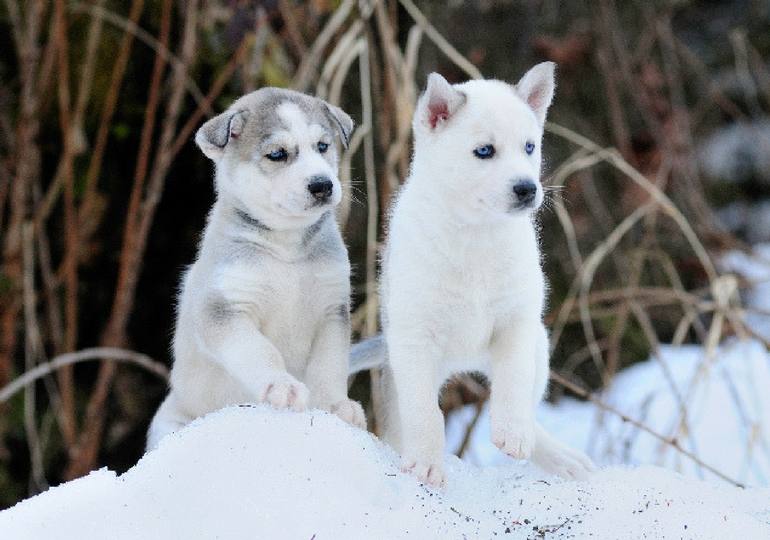
Known for their striking blue eyes and playful, chatty demeanor, Siberian Huskies make amazing family companions. And as with any dog, coming up with a name is no walk in the park – after all, they’ll have this name for life! If you’re struggling with what to name your Siberian Husky, we’ve rounded up some of the best – from well-known ones to quirky ones.

Akira

Akira means intelligent and also refers to the Japanese manga series created by Katsuhiro Otomo – which inspired the film “The Matrix.”

Alpine

Alpine means snow-covered – just like the Husky’s fur.

Balto

One of the most famous Siberian Husky’s, Balto led a team carrying diphtheria serum from Anchorage all the way to Nome, Alaska in 1925. He helped prevent an outbreak of the disease and his famous run is now commemorated by the annual Iditarod dog race.

Cherokee

Cherokee is a popular Native American dog name and refers to the Iroquoian language, which has had its own script since 1820.

Chinook

A warm wind found on the Pacific Northwest coast of the United States.

Dakota

Dakota refers to a member of the North American Indian people in the upper Mississippi valley and the surrounding area.

Eskobar

An interesting name, Eskobar means “spoiled” and refers to those who always get what they want.

Glacier

A glacier is a large ice mass that moves slowly.

Juno

Juno, or “Juneau” is the capital of Alaska but makes a great name for a Siberian Husky.

Kazu

Kazu is short for “Kazuki,” meaning peaceful.

Kremlin

A Turkish word, Kremlin means “fortress” and refers to a dog that is trough and strong.

Laika

Laika was the name of a mixed-breed Siberian Husky known to be the first dog in space.

Lonestar

Lonestar refers to someone with superior skills but bad luck.

Maverick

A maverick is someone who rebels from a group.

Nikita

Nikita is a great name for a Siberian Husky and means “little child.”

Nova

A nova is a star that suddenly becomes brighter.

River

River can refer to a free-spirited pup.

Sierra

The sierra is a rugged range of mountains.

Teeko

Teeko is a strategy game that was invented in the late 1930s but can be a cute name for a Husky.

Tundra

A widely popular name for Huskies, a tundra is a flat, treeless Arctic region.

Willow

Willow refers to a deciduous tree with small, narrow leaves.

Winter

Winter is a great name for a Siberian Husky with mostly white or all white fur.

Zaria

Zaria means “sweet, shy, and behaved.” This is a great name for a dog who prefers to lounge around.

Zorro

Zorro means fox in Spanish and is a great name for a sly, clever Husky.

VETSTREET.COM

Ultimately what you name your pup is up to you – but if you’re stumped, consider one of these fun names for your Husky pup.

How Much Should I Feed My Dog?

How Much Should I Feed My Dog?

Why is it that no matter how much dogs eat they are always hungry? While some dogs just love to eat, others may not be getting be the proper amount of food. But how do you know how much food you should feed your dog? We’ve got your answers.

While there is no fixed amount dogs should be fed, there are certain guidelines you can follow to determine how much your dog should be eating.

Most dog food labels have feeding guides but the size of their meal depends on the type of food, how many times they are fed per day, their size, metabolic rate, how much exercise they get, and more.

As a general guide for how much you should feed your dog based on their weight, here is a table based off PetMD:

Dog WeightAmount Per Day
5 lb½ cup – 5/8 cup
10 lb¾ cup – 1 cup
20 lb1 ¼ cups – 1 ¾ cups
40 lb2 ¼ cups – 3 cups
60 lb3 cups – 4 cups
80 lb3 2/3 cups – 5 cups
100 lb4 ¼ – 6 cups

The amounts are based on a 24-hour period. The majority of adult dogs should eat two meals per day whereas puppies often need three or more. So, you can divide the total amount recommended into two. When raw feeding dogs, a mature dog can be fed approximately 2-3% of their body weight daily

Another factor to take into account is lifestyle. If you have a particularly active dog, you may need to feed them a little more. But, if you have a more sedentary dog, the total amount should be a little less.

To get a general sense of how your feeding schedule is going, you can use visual cues (or a scale) every two to four weeks to see if your dog is losing or gaining weight.

Dogs who are a healthy weight will show signs of an “hourglass” figure. This means that when you look down on your dog from above, their abdomen should be narrower than their chest and hips.

They will also have their ribs not visibly seen but easily felt with light pressure. And, their chest should be closer to the ground than their stomach when standing.

Feeding your dog too little can cause them to suffer from nutritional deficiencies and feeding them too much can cause obesity and health problems such as congestive heart failure, musculoskeletal problems (osteoarthritis, intervertebral disk disease), and Cushing’s disease.

Though it can be confusing, use these tips to make sure you feed your dog the right amount of food to keep them happy and healthy!

Want to Contact Me?

Hellonuzzle