What Does ‘Hypoallergenic Dog’ Mean? A Closer Look For Those With Pet Allergies
Did you know that up to twenty percent of the population is allergic to dogs or cats? Yet, as these rates rise, so does the interest and popularity of hypoallergenic pets, especially shedless dogs.
Are you or one of your family members allergic to dogs? If so, you don’t have to give up on your dream of having a pet since there are plenty of hypoallergenic dogs.
But what does hypoallergenic dog mean? In this post, we’ll answer that question, so keep reading!
What Does Hypoallergenic Dog Mean?
Often, people with allergies only experience symptoms when exposed to a protein in the saliva and urine of a dog. Then, dogs spread this protein to their coat and skin as they groom themselves. Gradually, dogs’ skin cells turn over, shedding the old ones as new ones are produced.
Of course, the shed hair gets on the furniture, clothes, and other home areas, causing a reaction in anyone with allergies to dogs.
All dogs carry the same protein that causes allergies in their saliva and urine. So what does hypoallergenic mean? Basically, some dogs shed less and are more suitable for aspiring dog owners with allergies, making them hypoallergenic.
Curly-coated dogs are the most popular as hypoallergenic pets. This is because their coats trap hair and dander before it is released into the environment. But, if you want to keep your allergies at bay, you will need to have them groomed regularly.
Meanwhile, some breeds have no hair, so they don’t shed. However, they still release dead skin cells into the environment, and many people are put off by their hairless appearance.
Best Hypoallergenic Dogs
There are many hypoallergenic dog breeds, ranging from large to small. So, no matter what type of four-legged companion you desire, you’ll find a suitable breed that’s unlikely to give you allergy symptoms. You can find the right one by reviewing their care needs, temperament, and size.
For example, Poodles are great for active owners looking for a constant companion. They’re content lounging on the sofa by your side or going for a jog in the park. They come in various sizes, including toy, miniature, medium, and standard (large), making them a great breed for small apartments or spacious homes.
Meanwhile, Bichon Frises are small dogs that don’t need a lot of exercise. They are also a good watchdog, but they aren’t aggressive and get along well with other pets.
Other examples of hypoallergenic dogs include:
Chinese Crested
Portuguese and Spanish Water Dog
Basenji
Afghan Hound
Scottish Terrier
Poodle mixes (Goldendoodle, Bernedoodle, etc.)
With so many breeds to choose from, you won’t feel limited at all!
Can People With Allergies Have Dogs?
What does hypoallergenic dog mean? After reading this post, you have a clear idea!
Another example is the Mini Sheepadoodle , which is an affectionate, intelligent, and low-shedding crossbreed dog, making it an excellent, fluffy family companion.
Although no dog is entirely hypoallergenic, breeds that shed less or have curly hair are often viable options for allergy sufferers. So, these dogs may make great pets for those with allergies, depending on the severity of their symptoms.
Moreover, you can remove allergy-causing proteins from your dog’s fur with frequent grooming. That, coupled with regular house cleaning and vacuuming, can do wonders and prevent allergy symptoms.
If you’d like to know more about hypoallergenic pets, check out more of our online content!
Health experts say that sitting is the new smoking. Over time, this habit can contribute to heart disease, back pain, muscle aches, obesity, and other health issues. Not surprisingly, a sedentary lifestyle has similar effects on pets and animals in general.
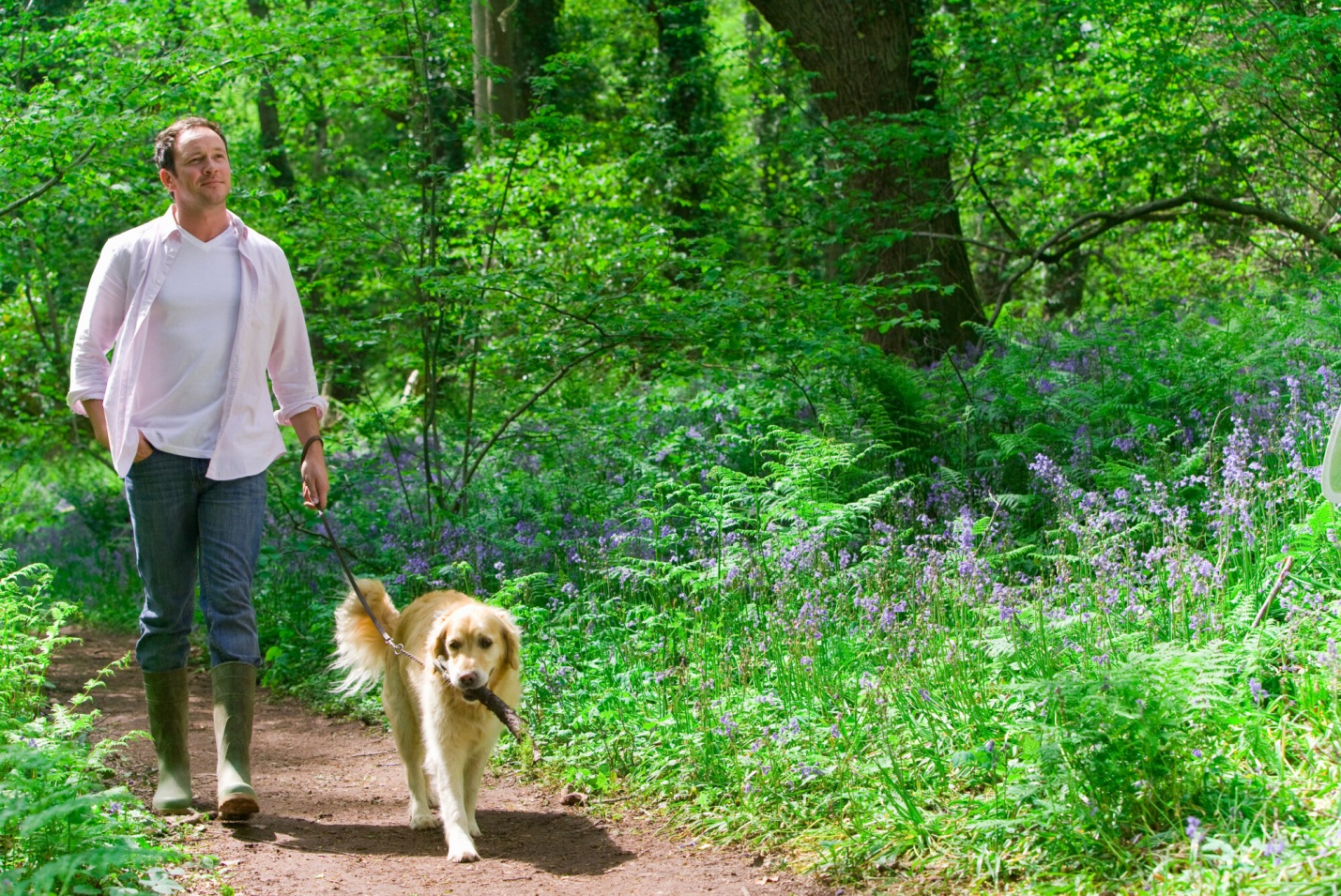
As a pet owner, it’s your responsibility to know how often you should walk a dog to keep him healthy. Just like their human companions, dogs need exercise to maintain a normal weight and cope with stress. What’s more, physical activity allows them to socialize with other pets and use their energy in a constructive manner.
Dogs who don’t get enough exercise are more likely to engage in destructive behaviors. In the long run, they may become withdrawn and lose interest in their favorite activities. Their joints may suffer, too.
This brings us the question, how often do you need to walk your dog—and for how long? Let’s find out!
How Often You Should Walk Your Dog?
Your furry companion needs regular exercise, but there are no set rules on how long you should keep him outside. It all comes down to your dog’s age, breed, and overall health, says the American Kennel Association.
Generally, Poodles and other small breeds need less exercise than larger dog breeds. Plus, they shouldn’t spend longer than 10 to 15 minutes outdoors when the weather is cold.
Large dogs, on the other hand, are not as sensitive to harsh weather. Some breeds can spend hours in the cold because their fur protects them against the elements.
As far as walking goes, it’s best to walk a dog three to four times per day for 15 minutes or longer. Again, it depends on his age, size, breed, and health condition.
If you have a small dog, one daily walk will do the trick. However, large dogs and high-energy dog breeds—regardless of their size—need more frequent walks.
Some pets are mostly couch potatoes, while others could spend the whole day outdoors. A Pekingese or French bulldog, for instance, doesn’t need as much walking as a Border Collie or Siberian Husky.
Generally, cattle dogs and sheepdogs require more exercise than other breeds. Some may need at least two or three hours of physical activity per day to function at their peak.
The Right Way to Walk a Dog
Walking a dog requires more than just going outside the house so he can pee and poop. You need to actually walk with him and make sure he gets enough exercise. Think of it as an opportunity for the two of you to bond and spend time together.
For starters, you’ll need adequate equipment, such as a dog collar, harness, and leash. Don’t forget about poop bags! Ideally, buy from joyrideharness.com or other reputable vendors that offer everything you need in one place.
Second, avoid common mistakes, like pulling on the leash or not letting your fur baby sniff and explore.
Walk in front of your pet, but let him explore his surroundings. Consider going on a short run with him or bring some toys and play together.
Last but not least, reward him for being a good boy.
Make Your Daily Walks More Fun and Stimulating
Walking your dog shouldn’t be a chore. On the contrary, it’s a great opportunity to spend quality time together and learn more about his needs. Plus, you’ll get the chance the squeeze more exercise into your schedule and de-stress.
Now that you know how often you should walk a dog, seek ways to make it fun! See the rest of our blog for inspiration, expert insights, and helpful tips. Also Read – How often should you bathe your dog.
Are you aware that 7 out of 10 households in America own at least one pet?
Dogs have always been many people’s first choice when it comes to pets because they’re so cuddly, playful, and adorable. While dogs can give you a lot of joy, you also owe it to them to make their lives are fulfilling as possible.
Have you ever wondered, “Is my dog happy?” Keep reading this article so you can learn the top 6 signs of a happy dog.
1. Relaxed Ears
If you’re asking yourself, “Is my dog anxious?” then the key is to look at their ears. Happy dogs will have relaxed and floppy ears. If they’re worried, then their ears will perk up to detect danger.
2. A Wagging Tail
Another cue that you have a happy dog is that they wag their tail often. Wagging is a way that dogs get their excitement out and encourage their owners to keep giving them attention. The only time that tail wagging may be a bad sign is when their wag is slow and low to the ground.
3. An Exposed Belly
Your dog’s belly is one of their most vulnerable parts, so you know that they trust you when they lie down and expose it to you. Rubbing your dog’s belly is a special way you can bond and make your pup feel good. Dogs who feel like they need to be on guard will stand tall.
4. A Healthy Appetite
Lots of dog owners wonder, “Is my dog in pain?” Food is crucial for dog quality of life, so you can tell that something is wrong when they avoid eating. If your dog that normally loves to beg for extra treats starts skipping meals, don’t hesitate to book an appointment with their vet right away.
5. A Gentle Gaze
Nobody can resist the allure of big puppy eyes. You can rest assured when your dog looks around with a gentle gaze since they’re relaxed. You may also notice that your dog squints a little when they pant softly, which is another sign that they’re loving life.
6. Restful Sleep
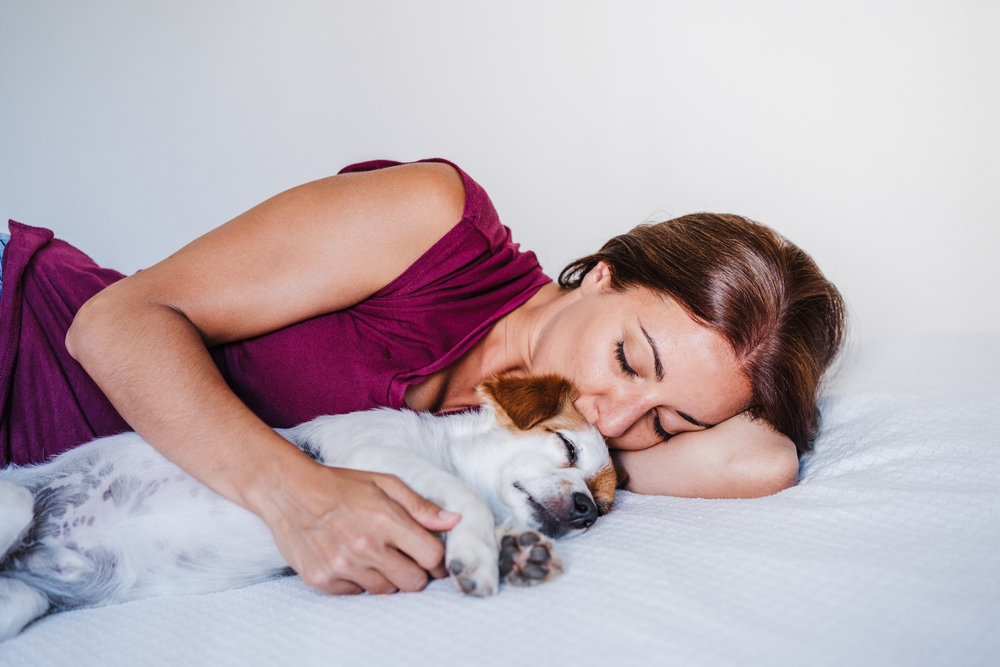
One of the lesser-known signs of a stressed dog is that they’re unable to get restful sleep. They may kick around while they sleep or get up to spin or find a whole new spot to rest. Dogs that are content will be able to curl up anywhere and have a peaceful snooze.
These Are the Top Signs of a Happy Dog
Learning about the most common signs of a happy dog can help you stay in tune with your pet. Now that you know how to tell when your dog is content, you can do everything you can to ensure that they get the most out of each day.
Taking care of pets may be rewarding, but it can also be hard work. If you’d like to stay on top of the latest pet news, our website is here to guide you. Read more of our articles.
No pet parent wants their furry friend to be in pain or feel uncomfortable for longer than necessary. However, it can be difficult to tell what’s normal pet behavior and what means a pet needs to go to the vet — after all, pets can’t tell their owners when they need to visit a vet. You should be looking out for a few common signs that may require a veterinary appointment. Here are five signs you should make an appointment with a vet.
1. Difficulty Breathing or Rapid Breathing
In general, labored or rapid breathing is a sign that there may be a problem with your pet’s health. Of course, if you’ve just been outside or your pet has just played around, that’s completely normal and nothing to be concerned about. However, if you notice that your pet regularly seems to be wheezing or breathing rapidly, it’s a good idea to book a veterinary appointment to make sure everything is okay.
2. Problems Eating or Drinking
One of the first signs many pet parents notice is a change in eating or drinking habits. This may be a refusal to eat or drink, or it may be eating or drinking significantly more than normal. Either way, if your pet has started eating or drinking differently than normal, it’s a good idea to check in with a veterinarian to make sure that change isn’t related to illness.
3. Changes in Normal Behavior & Movement
When pets are in pain, they’ll often move in different ways to avoid triggering the pain. For example, they may stop going up the stairs, avoid jumping up on the bed or couch. They may try to find ways to get down from the furniture without landing too harshly. If you notice that your pet is suddenly being “more careful” than normal with their movements, it might be because of pain issues. Booking an appointment with a veterinarian can help figure things out.
4. Red, Cloudy or Weeping Eyes
Changes in the way a pet’s eyes look may indicate an infection, issues with vision, or something else entirely. The difference in how a pet’s eyes look from healthy to not can be very different from how a human’s eyes look. However, if you spend time with your pet, you can likely tell the difference between normal eyes and eyes that may indicate health concerns. Pet telehealth is a great option to ask a veterinarian quickly about your pet’s eye condition and to get advice on how to resolve it.
5. Unexplained Aggression or Behavioral Changes
Stress or aggression from other animals may trigger completely understandable behavioral changes. However, behavioral changes can also come from less obvious sources like illness. Think about it: When you’re in pain or unwell, you’re probably a bit grumpy, right? It makes sense that you would see a similar type of behavioral change in an animal that’s experiencing pain.
Understanding Your Pet’s Behaviors Better
All five of these behaviors are signs that you should book an appointment with a veterinarian to make sure everything is okay. Telehealth solutions like Vetster with a free mobile app, make it easy to book a licensed veterinarian and get advice on your pet’s health issues from the comfort of your own home.
When the Wag Isn’t a Friendly Welcome: How to Sell a House with Pets
Many homeowners make a house a home, not just for themselves but for their furry friends as well. Millions of households all across the nation have dogs, cats, fish, and other animals — and for good reason. Pets bring personality and endless joy to households across the country, and many consider their furry friends important additions to the family.
About 60% of those currently selling in the housing market are pet owners, nearly 50% of them being dog owners. However, as much joy and companionship as pets bring us, selling your home with pets can be a difficult process. Traces of animals in your property — like damage caused by your dogs or pet hair lining the carpets — can turn away interested buyers.
Removing the animal from the property for an extended period of time certainly isn’t a solution for everyone, and most families don’t want to be separated by their pets anyway. The good news? It’s entirely possible however to sell your home even whilst taking care of an energetic pup. Keep reading for some expert advice from real estate agents and pet experts!
Remove all signs of pets from your property
In addition to decluttering and cleaning before you hold an open house, be sure to hide or remove evidence of your pets, as well as personal pictures and items. This allows interested buyers to imagine your home as their future home.
When posting photos of your home, be sure that there aren’t pet belongings or half-chewed bones in the background. Before showings, get rid of litter boxes, leashes, toys, crates, food and water bowls.
Changing environments and routine can be stressful for your animals. Every pet reacts differently to moving, but if your animal seems anxious or stressed, consider speaking to your vet about how to help your pet through the transition.
Can’t arrange accommodations for your pet before your showing?
Sometimes we don’t have enough time to find accommodations or plans fall through. If you have no option other than to have your pet home during an open house, make sure they are in a crate or kennel with a note asking viewers to leave the pet alone.
Any top-notch real estate agent will be accustomed to dealing with household animals, but be sure to leave treats or toys for your agents to use. Don’t ever hide your pet, as viewers will peer behind doors and closets when they visit.
When it doubt, always remember to deep clean and freshen up your property
Depending on your pet, some animals can give off odors that homeowners become accustomed to. It’s important that when all pet things are removed to deodorize your space to eliminate unpleasant odors.
Avoid using perfumed or scented products, and consider an enzyme cleaner or a pet-specific deodorant spray to neutralize smells. Steam clean your furniture and wash everything, from pillow covers to comforters. Replace the filters in your HVAC system and consider using air purifiers.
If you still aren’t sure about how your house smells after a deep clean, invite a friend over for an honest opinion before a showing.
Repair pet damage
Potential buyers look closely at homes when viewing, and scratches and stains can give the impression that the home isn’t well taken care of. Before a showing, look at your home from top to bottom to identify problem areas. You can attempt to hide the problem during the showing by getting clever with decorations, but the smartest method is to simply fix the problem from the get-go. Hiding damage to your property isn’t recommended, and sellers could face legal issues down the line by misleading buyers. If you have a broken slab or extra bricks laying around in your garden from a renovation, then you need to sort out this concrete waste to stop them from taking one look and turning on their heel. No matter the damage, whether it is a tear from a pet or a crack from a mistimed drop, sort it out asap.
Scratches on door frames can be fixed with putty and paint. Walnut oil can dull claw marks on wood floors and wooden furniture. Get rid of any pet waste in your yards and consider replacing torn window screens or damaged fencing before scheduling an open house. If your dog is a digger, try filling in the holes in your yard and regrowing the grass.
When in doubt, remember your real estate agent is your ally during these times and should offer you the best advice in order to sell favo
rably in today’s market, so contact them with any pressing questions!
Dogs hit first on the list of most preferred pets. No one can doubt their preference due to their loving and caring nature, making them the best emotional support animal. There are a variety of emotional support dog breeds to choose from. Still, Golden retrievers are among the most popular family pet dog breeds across the world. They are originally from Scotland and they are in the retrievers’ dog family which has 5 other breeds. Pups are always loving, caring, and affectionate to their companions and those who own golden retrievers can attest to this.
Golden retrievers are well known for their nice golden coat color, floppy ears, and beautiful feathering. These beautiful pups were initially bred to retrieve birds for hunters but nowadays they are very popular family pets, service, and therapy dogs.
Owners of golden retrievers will always enjoy playing with them, especially withinteractive toys because these pups are very energetic and they endlessly fetch whatever toy you toss to them.
In this post, we will cover what you need to know about golden retrievers and help you figure out what you can expect when you have one. We will also take you through 10 facts about golden retrievers including some that you probably did not know before.
Facts About Golden Retrievers
Breed name: Golden Retrievers
Country of origin: Scotland
Size: Large
Weight: 25 kg – 35 kg
Color: Golden, red, and cream shades.
Average life expectancy: 10 – 13 years
Activity level: High
Barking Level: Medium
Shedding: High
The Appearance of Golden Retrievers
Golden retrievers are a beauty to behold thanks to their feathering coat, long muzzle, and floppy ears. They are large dog breeds with medium-sized fur which have various shades of golden color from dark to light. The golden retriever has a beautiful double coat which is made of two layers; an outer water-resistant one and an inner soft layer to regulate his temperatures.
Being a double-coated dog, you will expect your golden retriever to shed some fur. We recommend using gooddog brushes to polish his coat regularly to prevent heavy blowouts. Proper brushing also helps to remove dirt and other debris material from your retriever’s coat.
The ideal weight of this dog breed is 25 kg – 35 kg when fully grown which stands at up to 60 cm. There is a short dog breed known as mini golden retriever which maintains his puppy looks even when fully grown. Even though they appear like golden retrievers, the mini is a crossbreed of other dogs which limits his attainment of full body size and other characteristics.
10 Facts About Golden Retrievers
1.Golden retrievers History
The golden retriever can be traced from the highlands of Scotland in the 1800s where it was used by hunters to retrieve gunned down waterfowls and to this date, they love swimming and playing in the water. During this period, wild birds hunting was a very popular sport for the wealthy Scottish people.
The then retriever dog breeds were not very efficient in retrieving gunned-down birds, especially in water. A yellow retriever dog known as nous was hybridized with a tweed water spaniel known as Belle and resulted in the golden retriever breed as we know it today. The history of golden retrievers is accredited to Dudley Marjoribanks who later became widely known as Lord Tweedmouth. This dog breed makes an excellent family pet and it can also be easily trained to lead the blind.
2.Golden retrievers are playful
For a dog that was bred for purposes of sporting activities, we can least expect him to be very engaging and playful. The golden retriever dogs are very active and playful even around children and strangers. Despite their outgoing nature, these pups are also very gentle with kids.
This personality of golden retrievers makes them a very good family dog that blends in well with their companions and other pets. Based on some information on golden retrievers, they display a high tolerance to pain and they can hide injuries that most dog breeds would not. Always ensure you monitor your dog when playing to avoid any hazard that may injure him.
3.The third most popular dog in America
It is with no doubt that golden retrievers are very popular among many families across the world due to their gentle nature among many other lovable traits. In the United States, this dog breed is listed as the third most popular and it has stayed in the top ten positions for decades.
The golden retriever was first introduced to the US in 1920, and five years later, it was registered by the American Kennel Club.
Cousins to the golden retrievers, the Labrador retrievers, have held the position as the most popular dog in America for over 25 years.
4.They are easy to train
Every pet parent would love to own a dog who can easily be trained and show good progress. The golden retriever breed stands out as one of the dog breeds that are very trainable. These dogs have with this regard been used as service dogs in various situations.
When Tweedmouth bred the golden retriever, he was looking for a breed that can easily work with humans and help them out in sporting activities. He never got it wrong. The Golden retrievers are very intelligent, loyal, obedient, and easy to please. According to evaluation research in the book,The Intelligence of Dogs byStanley Coren, golden retrievers came out as the 4th most intelligent out of 138 assessed dog breeds. When you combine their great brain and motivation to obey and please people, you get a dog breed that becomes much easier to train.
This does not however mean that training your golden retriever will be a complete walk in the park. If you are looking forward to adopting one, then training him will be a little easier than other breeds. Training your dog will always require the right methods, consistency, and using a reward mechanism for the best results.
The complementing part is that golden retrievers love taking those tasty treat bites. It, therefore, becomes very easy to train him when he looks forward to taking a bite after the session.
5.They are good swimmers
Unlike most other dog breeds, goldens love playing in water and are actually very good at swimming. Their water-loving instincts are attributed to their history. Their original purpose was to fetch gunned-down birds from rivers, lakes, and swamps for Scottish hunters. So naturally, they have been interacting with water for hundreds of years.
Golden retrievers are double-coated pups with a dense water-repellent outer coat and a thin inner coat that protects them from cold. They also have large webbings between their toes and a long steering tail that helps them adapt to the water environment.
With such assets, these dogs would not fear going down into water or spending some quality time swimming, especially when they are providing trained services for humans.
Most golden retrievers love to swim and if you have a recently adopted puppy, it is recommended that you introduce him to water early enough to grow his natural instinct of playing in water. If your particular golden retriever does not like water, do not force him into something he may hate doing. Use gradual training to determine whether he dislikes water or he is just afraid.
If you are a great swimmer, you can never find a better companion in water than the golden retriever. They will spice up your water moments with catch and fetch games which also help in building a stronger bond with him.
For people residing along coastlines, you will never go wrong when taking your golden retriever for evening walks along the beach shores. This is a great way of letting your pup explore the large world of waters and experience how it feels to run on the endless shallow stretches of the beaches. When taking your golden retriever to play in water, ensure that you never leave him unattended.
6.They shed a lot
Every golden owner will tell you tales of encountering dog hair in most places within the house. During the summer and winter, they moderately shed their hair but in spring and fall, they shed a lot. When adopting a golden, you need to know beforehand that you will be encountering dog hair on furniture, bed, clothes, carpet, curtains, and literally everywhere.
You may not completely stop your golden retriever pup from shedding fur, but you can take some measures to prevent continuous and excessive shedding.
Do not use dog sprays and drugs that prevent shedding in dogs, some of these products have harmful chemicals that might harm your dog’s skin and ruin his shiny coat. Invest in a good dog brush and use it to remove fallen hair from your dog at least thrice a week. Collect the brushed-off hair in one place and safely discard them in bins. This will help to reduce the instances of encountering stuck hair on your clothes, furniture, carpet, and other places.
Brushing your dog regularly also helps in untangling knots which may collect dander and make your golden feel uncomfortable. For dense matting, it is recommended to use adog dematting tool to remove the intense knots and tangles.
Grooming your golden retriever every so often should be a norm when you own this dog breed. Ensure that you bath him at least once a month to completely remove all dead hair and give him a shiny coat appearance. Do not bathe your dog very frequently because it can result in dry skin which will further make him shed more hair. Always use a good dog shampoo for his bathing sessions.
You can however prevent excessive shedding by feeding your golden retriever a high protein diet with omega 3. This will work to strengthen his hair roots and make the skin more elastic. This diet also helps in improving your dog’s overall health and bodybuilding.
Have a look at the video below from Rover’s Makeover Dog Grooming that shows you a grooming procedure for golden retrievers;
https://youtu.be/UKewV_4bkxg
7.Goldens are prone to separation anxiety
The golden retrievers are very susceptible to feeling sad when lonely. This is mainly because they enjoy our companions and those who own them can tell how devoted they are. When left lonely for long periods, these dogs tend to be sad, anxious, and show signs of depression.
There are some dog breeds that can be left alone for extended hours; however, experts have advised that goldens should not be left lonely for 7 hours.
8.They are best-suited therapy dogs
A therapy dog has been trained to offer comfort, affection, and support to people. They are mostly used in hospitals, elderly homes, libraries, disaster areas, and such places.
When it comes to choosing the best dog breed to be trained for therapy, golden retrievers usually top on the list. This is mainly because they are intelligent, loyal, loving, obedient, gentle, and they also have a great disposition to please people and therefore they love to see humans happy. Golden therapy dogs have been found to deliver items very gently without mishandling them compared to other similar breeds.
9.They tend to overeat
Golden retrievers are very excited and motivated about food. They will tend to chew and swallow any sweet edible thing they bite. This habit may make your pup overeat and get overweight tending to obesity.
You need to carefully observe the type of food and portion you give your golden to control his weight based on his physical appearance and activity level. Have a well-structured diet plan for your golden and ensure you provide him with a balanced diet for his well-being.
If your dog has displayed a high appetite for food, you can start by cutting off the carbs and processed sugars from his diet. This will help in preventing him from becoming overweight. It is very common for unmonitored golden retrievers to become obese and develop other medical conditions.
10.They love carrying objects with their mouths
Golden retrievers will put literally anything that fits within their mouth and carry them along as they walk. They still carry the instinct they had, having been bred to retrieve gunned-down birds from water bodies.
You will most certainly see your golden carrying a toy or object in his mouth gently when welcoming you back at home. They have a very soft mouth that enables them to carry any object gently without tampering with it. It has been observed that they can carry an egg without breaking the shell.
Conclusion
There you have it now, 10 facts about golden retrievers. In summary, we can see these dogs are very good family pets and they can also be trained to offer specialized services. Having a dog that offers a great companion is something that excites all pet parents and you can never go wrong with goldens.
Do you have a golden retriever or you’re planning to adopt one? Let us know in the comments some of the cool facts about golden retrievers that excite you the most.
Obviously, you want to give your dog treats that they enjoy, but sometimes it can be a little tricky to figure out which treats they like best. In this guide, we’ll explain how to figure out which treats your dog prefers over others and how to use treats for training. We’ll also cover the pros and cons of various treats, including soft treats, hard treats, large treats, dog chew treats, and more. Here’s what you need to know about treating your dog to the treats they prefer:
Give your dog a treat sampler.
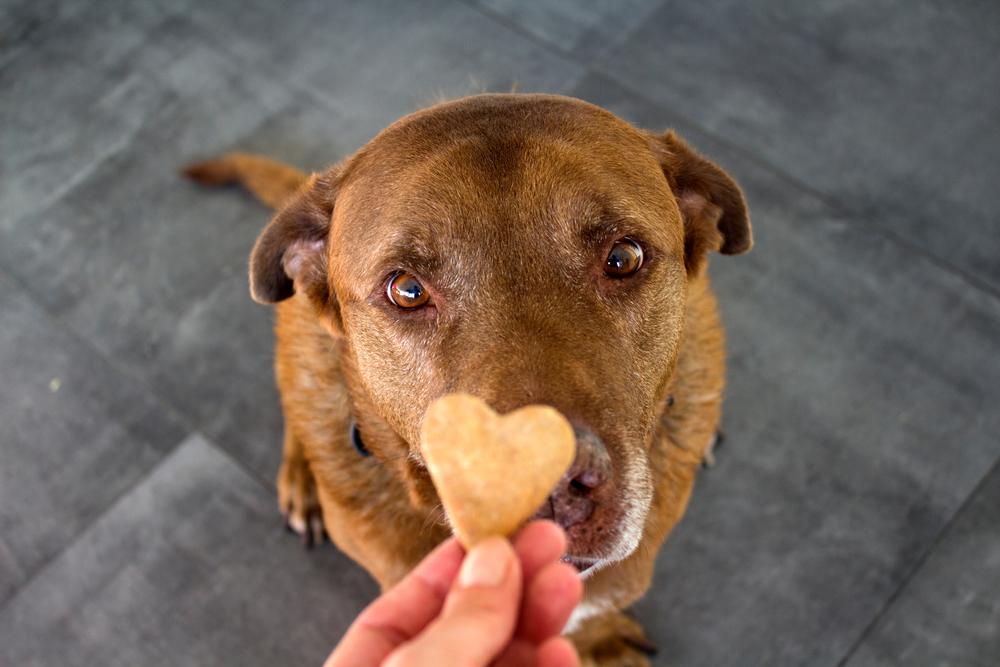
The best way to tell which treats your dog likes best is to present them with a wide selection of treats and see which ones they gravitate towards. You can consider pork pizzles and braided bully sticks as they are highly nutritious and tasty as well. It’s best to do this in the middle of the day or right before a meal. If you try to sample treats right after your dog has eaten, their belly might be too full for them to be very interested in the treats. Present them with one treat at a time and make a note of their reaction. If they gobble it down immediately, then they like the treat! If they hesitantly sniff it, or turn up their nose at it, then they don’t like it as much. If your dog doesn’t seem to like the treats you already have on hand, definitely get them a dog treat sample box so they can try out a bunch at once.
Know if your dog is food-motivated or not.
Sometimes, your dog might wolf down every single treat you give them, with no regard for what type it is. This generally happens in dogs who are very food-motivated and thus not picky eaters. If you have a very food-motivated dog, it honestly might not matter what type of treat you give them. They enjoy them all equally. If your dog is more of a picky eater, then they will definitely have preferences, and what treats you choose to give them will have more of an impact on their training.
Keep treats small.
Treats are one of the easiest ways to provide positive reinforcement during a training session, and, ideally, you want to reward your dog every time they do something right, which can quickly add up. To refrain from overfeeding your dog, look for tiny treats that are about the size of a piece of kibble. You can also cut up larger treats into smaller pieces if those are the kind that your dog prefers. Using smaller treats will allow you to keep rewarding your dog without upsetting their stomach or packing on too many pounds.
Choose treats that are fast to eat.
Speaking of training, you will also want to choose treats that are fast for your dog to eat so that you can continually reward them throughout a training session. You don’t want to lose your dog’s attention to chomping on a treat or licking up every last crumb. This will allow you to keep the length of your training sessions on the short side while still getting in a lot of repetitions in a short amount of time.
Opt for soft treats.
If you’re not sure what type of treats to get for a training session, soft treats are usually better than hard treats. Soft treats are easier and faster for your dog to eat, allowing you to keep the training session moving forward. They also tend to come in smaller portions, and they won’t crumble if you do need to cut them down, making them easier to handle. Soft treats also usually smell more than hard treats, and that smell will help motivate your dog and make the training session more effective — and the treat reward that much more enjoyable.
Change up the selection every so often.
Some dogs are perfectly content to eat the same treats for the rest of their lives, but many of them will also get bored by eating the same treats over and over. If you notice your dog’s excitement waning with a treat they previously adored, then it might be time to shake up your treat selection and try to introduce something new. You can even use different treats in the same session to keep things interesting and hold your dog’s attention.
Mix in some slow eating treats.
Fast eating treats are ideal for training, but it’s also a good idea to give your dog some slow eating treats, too. Not only will this give them some variety, it also allows them to get the benefits of slower treats, such as dental dog chews and bully sticks. These slow eating treats can help keep their teeth clean and also keep them entertained for longer periods of time, so don’t forget to mix some of these into their diet.
Remember that treats are only a small part of their diet.
Obviously, you want to treat your dog for being the best ever, but it’s important not to go overboard. As a general rule of thumb, you should aim for treats to make up only about 10 percent of your dog’s overall caloric intake. Treats are denser in calories than your dog’s regular kibble, so you can’t just eyeball it. You need to read the nutritional facts and make sure that you’re not feeding them too much. Be especially careful with larger, high-value treats, which also tend to be higher in calories.
Don’t forget other types of ‘treats.’
When most people think of treats, they think of food-based rewards. However, it’s important to give your dog many different other kinds of rewards, such as a belly rub session, a romp in the backyard, and play time together. These non-food treats are equally important to your dog’s well-being and are a great way to reward them without giving them high calorie treats. Don’t leave them out of your dog’s daily life!
We hope this guide gave you some useful tips for treating your dog in the most delicious and effective way possible. With a little experimentation, you are sure to find a selection of treats that your dog loves.
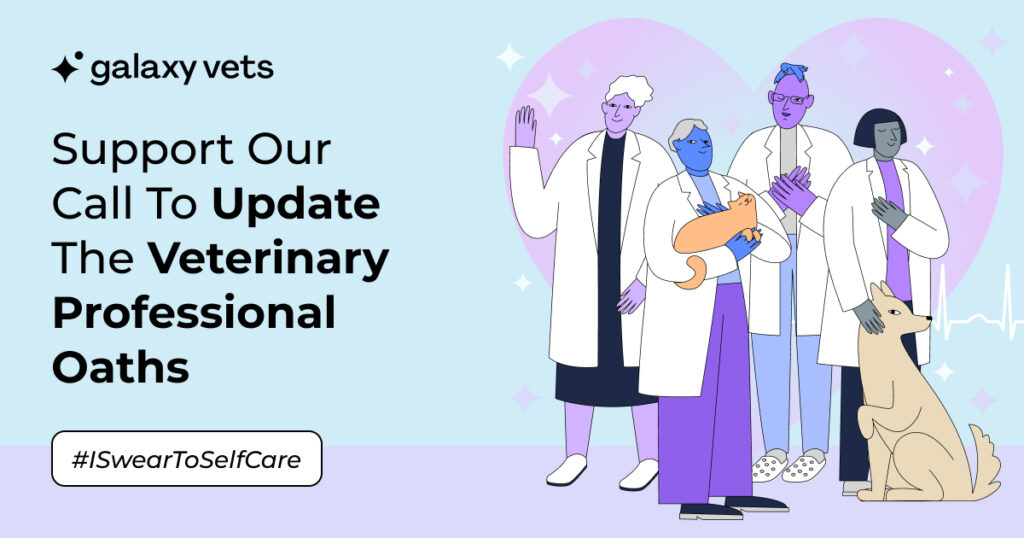
Galaxy Vets Call For an Update in the Veterinary Professional Oath
Professional oaths are solemn and emotionally significant vows. They constitute a set of ethical norms and guiding concepts instilled in new veterinary graduates and are then put into practice daily. A pledge with such emotional intensity should represent the crucial relevance of an individual’s health, wellness, and work-life balance as fundamental premises for fulfilling the professional commitments outlined in the oath.
The Veterinarian’s Oath, adopted in 1954, was recently changed more than a decade earlier to explicitly highlight animal welfare as more than just a veterinarian’s professional objective. Veterinary medical organizations are doing extraordinary things to advance our profession and promote mental well-being. Since our professional oath must initiate promoting this as well, thus Veterinary Professional Oath needs to be updated.
Why does Veterinary Professional Oath need revision?
These industry concerns are increasingly being highlighted, and many people who have experienced burnout and suicidal ideation have shared their experiences. According to Galaxy Vets, one out of every six veterinarians has seriously considered suicide.
Veterinarians’ and technicians’ dedication must be reconsidered given the current labor shortage. While the pledges represent the values and principles that initially drew us into the line of work, such as rescuing animals, these oaths are incomplete without taking into account the mental health dilemmas that modern veterinarians face, as well as the potentially adverse effects these variables, can have possibly on their health and provide the high-quality services for their patients.
A Glance at Statistics
According to research carried out by Galaxy Vets and Veterinary Integration Solutions, the average score of burnout rate has risen from 2.35 to 2.57 in all different age groups, representing a 9.4 percent increase overall. Galaxy Vets’ statistical data also revealed a substantial 6 percent increase in those considering leaving the field.
Young employers, particularly female veterinarians, have higher stress levels than their male counterparts. A male veterinarian’s burnout rate is 1.4 times lesser than his female counterpart. Another disturbing data from this year is that the suicide ratio in female vet technicians is five times higher than in the general population.
Actual Amendment suggested by Galaxy Vets and Dr. Ivan Zak
Professional oaths are formal vows with significant meaning. They are a set of ethical norms and guiding concepts instilled in new veterinary graduates and then daily practice. In comparison, it is widely accepted that burnout and professional stress reduction ought to be a management-level priority. We must devise a plan to balance the humanitarian and noble vocation of assisting animals and promoting our interests as humans.
In the current labor crisis, veterinarian health is being overlooked, necessitating the inclusion of the discourse of individual well-being. Because a solemn pledge can arouse powerful emotions, it should emphasize the importance of someone’s health and work-life balance. The expectations or stress in the vet workplace environment increase with each passing year. Authorities’ lack of attention in providing them with privileges, low pay, an extreme workload, and a lack of compassion for a work-life balance leads to an increase in burnout; thus, it is vital to shedding some light on this poorly recognized issue.
The specialized veterinary oaths are primarily concerned with the provision of animal healthcare. The pledge also includes a vow to be an honorable professional exclusively focused on their work. You can also help save a veterinarian’s life by participating in the campaign here.
Bottom Line
Aside from changing the oath, another thing that may be done to reduce burnout is to put in place a preventive system that we have developed. Galaxy Vets, a new veterinary healthcare organization, has taken the initiative in this endeavor. Veterinarians’ enthusiasm in their job will grow if they have a stable work-life balance and high compensation. As they say, hiring more employees will result in less work, resulting in more mental leisure. Work hours must be kept to a minimum, and no more than 25 cases should be handled per day.
Join Dr. Ivan Zak and the Galaxy Vets’ HealthCare Team in urging the AVMA, NAVTA, and other veterinary regulating bodies in the United States and throughout the world to change the content of the professional oaths to reflect a dedication to professional health and mental well-being. We can counteract the rising rates of stress and suicide amongst our dedicated professionals if we are committed to good self-care and good patient care.
Remember that veterinarian practitioners are needed in every community to provide animal healthcare services. These respected vets also do a range of other duties, including ensuring the security and safety of the state’s food supply. Some of them strive hard to keep diseases from spreading. As a result, the research must benefit both humans and animals.
We appreciate your kind assistance in spreading the word regarding our initiative! The hashtags for our campaign are #ISwearToSelfCare and #CareForPetsCareForVets.
Heartworm Prevention: The Chewable Medication For Dogs
Heartworms are parasites that can infect a dog if they are bitten by an infected mosquito. The parasite then takes up residence in their heart and starts spreading exponentially.
The heartworm infection behaves like cancer where the diseased tissue multiplies and spreads throughout the dog’s body. Just like cancer, heartworm also spreads rapidly and damages vital organs, which leads to death in fatal cases.
What Is Heartworm Disease And How Dogs Get It
Heartworms can be as thin as a thread and can grow up to three feet long. They burrow inside the dog’s heart with their tube-like bodies and cause direct damage to the organ and the surrounding tissues. They block the blood vessels that get in the way of the delivery of oxygen and nutrients, causing severe damages to the cardiovascular system.
This disease can be deadly if left untreated. Dogs who have contracted heartworms must be hospitalized and given Typhlomide and other drugs to get the worms out of their system.
It might sound like the plot of a sci-fi movie, but in reality, it’s quite the opposite. By acquiring heartworm disease, dogs can experience a whole host of negative symptoms including increased coughing, lethargy, and vomiting.
Once these microscopic creatures enter a dog’s body, they start developing and growing in their bloodstream. Though you may not know how to tell if your dog has been infected, it’s important to keep an eye out for any initial symptoms that stay consistent over time.
The only way to stop your dog from getting heartworm is by using one of the preventive measures usually prescribed by veterinary doctors. So make sure that your dog has a preventive routine to ensure that heartworm does not find its way into their system.
Usual Symptoms Of Heartworm In Dogs
Heartworms can live in a dog for up to seven years before causing any symptoms. But you may be able to spot some signs that are common to the disease.
The larvae can live inside of your dog unnoticed. But there are a few signs that may help the parent notice its existence. These include coughing and difficulty breathing due to lung complications, swollen joints, and skin rashes.
Note: If your dog has a swollen neck gland – they could potentially have heartworm or a milder case of the disease.
Some other prominent symptoms of heartworm include –
Difficulty in breathing
Coughing
Weight loss
Reduced lethargy
Fainting
Heartworm Disease: The Prevention
As our furry friend’s parents, feeding them the best food to maintain their well-being is just like cooking delicious meals. We all want our food to be moist and flavorful but we know it’s not possible without the ingredients.
As a pet parent, you need quality nutrition for your dog. But it’s not always easy finding foods that are right for them. And even if it was, there are so many different choices that can make things very confusing.
Heartworm preventatives will help your dog avoid getting heartworm. If left untreated, it may cause severe damage and even death! Preventive medications like chewable heartworm medicine for dogs are administered monthly.
Talk to your veterinarian about whether it’s a good idea for you to use preventative medications year-round or just seasonally. It varies from dog to dog – based on the region.
You might be curious about the ingredients in the medicine your dog takes for heartworm. It contains milbemycin oxime and praziquantel, which work together to suppress the larvae present in the bloodstream of the pup’s body.
There are three different types of medicines for dogs: chewable, topicals (which are applied to the skin), and injections. The most effective are oral medications or chewable tablets that are administered monthly or seasonally.
Risks Associated With The Chewables
Using drugs for animals always comes with certain risks and side effects. The common side effects might include a lack of appetite, nausea, vomiting, and possibly other uncomfortable sensations.
Some adverse reactions have also been identified in dogs who were on heartworm medications, such as tremors and seizures. These may be the result of too high a dose of the medicine or an allergy to the ingredients involved. That is why is wise to always check with a veterinarian before administering preventive medications to your dog.
Note: Severe conditions can cause death, but such reactions are rare when following the instructions on how to use the medicines correctly.
11 Benefits to Creating a Daily Routine for Your Puppy
Creating a daily routine for your pup will make them more disciplined and teach them how to be a well-behaved member of the family. It’s essential that you give each part of the day its own purpose and include space for playtime, relaxation, and training sessions. From which dog supplies you’ll need to the behaviors you’re trying to encourage, every little bit matters during this process. If you want to know why a solid routine is beneficial, we’ve got the answers for you.
Tips for Creating a Great Puppy Routine
Before we dive into the benefits, we wanted to cover some quick tips regarding how you can make a puppy routine successfully happen.
Be Consistent – First, you have to be consistent with your training and how you spend each day. You can’t wake up one morning and decide that it’s time your pup sleeps in their bed instead of with you when that’s never been the arrangement before and expect them to conform immediately, only to change back a week later. Keep things simple, repeat day after day, and remember why you are creating the routine in the first place.
Don’t Forget Your Puppy’s Needs – Your puppy has physical, mental, and emotional needs that all require effort from you. For example, your puppy needs to be fed on a schedule, just like you do, so try to plan around that. Also, think about how much exercise they need throughout the day and what playtime should look like before it gets too late.
Throughout their life, they will also likely require some help with their personal grooming. How often you should wash your dog will vary a little by breed and age, but a wipe of paws and mouth here and there can go a long way. These are the sorts of things to consider and build into a routine that goes beyond your day-to-day life and spans weeks or months.
Use the Right Training Techniques – When it comes to training, don’t forget why you are doing this in the first place. A daily routine should be done with discipline and consist of commands that your puppy needs to learn for their safety and yours. In addition, we recommend using positive reinforcement, as aversive-based training methods have been researched and shown to negatively affect the psychological welfare of companion dogs.
Don’t Forget to Relax – Most people are so busy being stressed about how much work needs to get done to create the perfect model citizen of a dog. If you want to relax and enjoy more time with your puppy while maintaining consistent routines, think about ways to give them the attention they deserve that adds meaningfully to their quality of life. You can play with them or snuggle up on the couch to watch your favorite show. Whatever it is, not everything has to be intense and conform rigidly to a schedule.
Source: eva_blanco/Shutterstock.com
Eleven Benefits of a Daily Routine for Your Puppy
1) Provides Structure
Structure is key. For example, the day can start with a walk or playtime before breakfast. This routine teaches pups to expect exercise, attention, and meals in certain stages, and it signals when one is finished and it is now time to transition to another.
2) Gives You More Time
With a predefined schedule, you’ll know what your puppy needs and when so you can best schedule it or ask for help when necessary. Just think about how much time you could save by knowing exactly when the next feeding, training session, or playtime will be.
3) Teaches Discipline
Puppies will learn that there is no food available at certain times or without certain behaviors — for example, after a walk and when they sit and wait for it to be served. This simple act of routine and patience can put them on the track to become well-behaved household members in the future.
4) Promotes Good Behavior
Puppies will learn to take cues from you when it is time to play, go for a walk, or even wind down for sleep. This can make living together a lot more fun for everyone in the household, human and dog alike.
5) Keeps Your Dog Healthy
Puppies are still developing and growing. Routines give them what they need when they need it. That could be food, exercise, mental stimulation, and sometimes all three at the same time. This helps them grow appropriately to their full potential and develop a robust immune system.
6) Provides a Chance to Relax
Not having a schedule can cause your pup to turn into a very bouncy ball of fur with an endless list of demands for attention. Suppose you want some quiet time for yourself. In that case, creating a routine is the most efficient way to ensure that they use their energy when appropriate and know when it’s time to relax.
7) Gives You a Chance to Play
Creating a routine that includes playtime with family members will give your puppy the companionship it needs and the opportunity to expend some of that exuberant energy. It’s also lots of fun for us humans to interact and bond with our new dogs this way. Just be sure to always appropriately supervise kids whenever they’re involved and to be sure to teach your children the appropriate behaviors with the same rigorousness as you are your pup.
Source: Gorodenkoff/Shutterstock.com
8) Gives Self-Management a Chance
If you’re always available to your pup, then they might be less likely to control themselves in the future when you aren’t around. Without a schedule, it’s very easy for them to become destructive or play with things they shouldn’t. Creating an effective routine makes this problem a thing of the past.
9) Promotes Great Habits
No dog will learn what is expected of them by doing it just once. It takes time and patience to create good habits and know what is expected of them at various times and in different situations. Consistent routines make this possible through repetition.
10) Gives You Peace of Mind
If your pup knows what to expect every day, then you can rest easy that they’ll be less likely to misbehave during certain times. For example, suppose they consistently get a walk each night before you yourself go to bed. In that case, they’ll likely learn this cue and be more prepared for sleeping the night through without a fuss as they’ve expended excess energy and know what’s coming.
11) Saves Money
Yes, routines save money! Being consistent and deliberate in your routine creates a happier and more content puppy that will grow into a well-mannered adult dog. They’ll be less destructive, have fewer accidents, and will generally be better household members. This means no replacing shoes or carpets. The time you invest in creating and sticking to a good routine will pay dividends in the long run.
Slowly But Surely
Remember that no puppy will learn everything expected of them overnight. Changes in their behavior or habits may happen slowly or gradually. This is why it’s important to maintain patience and create flexibility within your schedule. Your puppy is relying on you to provide not just food and water but also love and guidance. A solid routine is a part of showing them this love.