Category: Best Dog Blogs

“How Do Dogs Choose Their Favorite Person?”

“How Do Dogs Choose Their Favorite Person?”

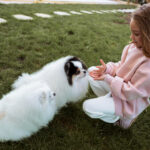
Have you ever watched in disbelief as your dog – the one you feed, walk, and give so much love to everyday– sprints to your sibling when they arrive at your house? You keep waiting for them to come to their senses and return to you but they act like you don’t even exist. Then you slowly start to realize you may not be your dog’s favorite person. But how do they even choose who that is? Can they change? We’ve got your answers.

Socialization

While every pup is different, there are certain generalizations that apply. Dogs typically bond the most with their primary caregivers during their socialization period – between birth and six months. During this age, puppies brains are amazingly receptive and those early social experiences shape them for the future. This is why it’s imperative puppies have positive interactions with different places, people, and things.

If you adopted your dog as an adult, don’t fret. While early socialization is important, continued socialization is equally important!

Attention and Affection

The majority of dogs bond with the person that gives them the most attention and affection. For example, if you live in a household of two or three other people, your dog may bond the most with the one who feeds them or takes them on walks.

Furthermore, physical affection is a huge factor when it comes to the bond between human and dog. If someone is abrasive or stand-offish, the pup will act the same towards them. The opposite is true in that the person who shows the dog lots of love and affection will get that in return.

The quality of attention and affection matter as well. For example, while you may be the primary attention-giver, if your sibling or friend allows the pup to jump up on them or lay on their lap while you don’t, they may choose them over you as their favorite.

Positive Association

Positive association is a huge factor in the bond between humans and dogs. Whoever provides the “good stuff” the dog will follow. For example, the person who plays the most with the pup, gives them their favorite treats, or feeds them the most will certainly be their favorite person.

On the other hand, dogs react poorly to those they have bad associations with. Therefore, positive associations lead to positive relationships. One way to establish this is by introducing your pup to a new person with treats. That way, they’ll associate new people with yummy treats!

Dog Breed and Human Personality

If you’ve ever seen a dog that looks and acts like their owner, you aren’t just seeing things. Dogs tend to choose their favorite person based on personality and energy levels. For example, if you are quiet and more reserved but your dog is lively and energetic, they may have a stronger bond with your outgoing and energetic sister.

Certain breeds tend to bond closely to a single person – meaning their favorite person will be their only favorite person. These include Cairn Terriers, Shiba Inus, Greyhounds, and Basenjis.

How to Be Your Pups Favorite

Feel like you aren’t your dog’s favorite person? Don’t worry! There are certain things you can do strengthen and improve your bond. The best way to is to spend at least 30 minutes of one-on-one time together every day.

And it’s not just about walks or hanging out on the couch together – it means doing things like playing fetch, tug, or hide and seek, having a training session, or even trying a new sport like agility or flyball.

As long as you take good care of your pup and provide them with positive experiences, your bond will be stronger than ever. And even if they act like they like your sibling over you, there is nothing like the bond between a pup and their owner.

Why Is My Dog Vomiting And When Should I Be Worried?

Why Is My Dog Vomiting And When Should I Be Worried?

If you’re a pet owner, you’ve probably had to deal with dog vomit at some point. Dogs throw up for a number of reasons. While some are harmless, others can be detrimental. Here is a guide on why dogs vomit, when you should be worried, and how you can treat it.

Why Dogs Vomit and What to Watch For

Dogs throw up for different reasons. It could be because they ate something they shouldn’t have or something more serious such as head trauma, exposure to toxins, or even pancreatic cancer or gastrointestinal obstruction.

Because dogs tend to eat everything, vomiting is a vital function for them. It is a way to correct the body when it makes a potential mistake. In addition to eating something they shouldn’t have, dogs can vomit due to motion sickness or bilious vomiting syndrome.

On a more serious level, vomiting can be a sign of gastroenteritis (inflammation of the intestinal tract and stomach), parasites, inflammatory bowel disease, and certain types of cancer. It is also caused by toxin exposure, liver or kidney disease, bacterial, fungal, or viral infections. Furthermore, vomiting can be a sign of Addison’s or pancreatic disease, head trauma, ulcers, drug side effects, and food allergies.

It is important to distinguish between vomiting and regurgitation. Regurgitation happens passively and occurs when undigested food comes up without the use of the abdomen. Vomiting, on the other hand, is an active process and involves contractions of the abdomen (also known as heaving). It is usually preceded by nausea signs such as swallowing excessively, drooling, and licking their lips. Dogs may eat grass to protect their esophagus. The grass acts a shield for sharp objects such as bone shards.

Differentiating between the two will allow you to get the proper treatment.

When You Should Be Worried and Treatment Options

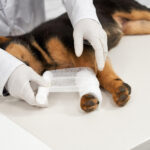
Sometimes a vomiting dog needs immediate treatment. If your dog is frequently or projectile vomiting, it can be a sign of an obstructed gastrointestinal tract. Severe diarrhea coupled with severe vomiting can cause dehydration and should be treated immediately. Decreased urination is also a sign of dehydration.

Dogs suffering from abdominal pain or enlargement is often a sign of serious vomiting. If your dog is repeatedly attempting to vomit but nothing is coming out, if can be a symptom of gastric dilatation and volvulus (also known as bloat).

Lastly, if the vomit has blood in it, it could be gastrointestinal bleeding. If it is bright green, it could be a sign of rodenticides (rat and mice poison). Rodenticides are extremely poisonous to dogs and could kill them.

If your dog is exhibiting any of these symptoms while vomiting, take them to the vet immediately. But, if your dog only threw up once or twice and appears to be okay, there are some at home treatments you can provide.

First, take all food and water away for six to eight hours. If your dog doesn’t vomit during then, give them small amounts of water and gradually increase the amount until your dog can hold it down. After 12 hours of no vomiting, you can offer your pup a small meal of boiled, skinless, boneless white meat chicken and white rice. If there is still no vomiting, start to increase the size and decrease the frequency of their meals over the next couple days. Finally, you can begin mixing in their regular food.

No one likes to see their furry friend in pain. If your dog is showing any signs of severe vomiting, contact your veterinarian immediately. Otherwise, try some at-home remedies for less severe vomiting. Your pup will be on their way to feeling better in no time!

Enjoy The Water With These 7 Swimming Safety Tips For Dogs

Enjoy The Water With These 7 Swimming Safety Tips For Dogs

Summer means fun in the sun, and in the water! These detailed swimming safety tips for dogs will help you make the most of the favorite seasonal activity. Water safety is an extremely important part of being a responsible dog owner.  While you may have mastered the ‘doggy paddle’, don’t assume your dog is a natural swimmer.

Before venturing into the waves or pool with your dog, make sure you abide by these top safety precautions to keep your dog safe. Remember, a safe dog is a happy dog!

7 Swimming Safety Tips For Your Dog

  • If your water activities involve a boat, make sure your dog is dressed for the occasion with a life vest. Even if your dog is a strong swimmer, accidents happen. It’s always best to be prepared.
  • If your plans involve some beach fun, make sure you are aware of any rough water.
  • Monitor what snacks your pet may find in the sand at the beach.
  • If you’ll be sitting pretty poolside, you may want to find a pool with a fence to keep your pet contained. You’ll also want to make sure that if your dog does decide to dive in the water, they know how to get out.
  • No drinking the pool water! Look out for those Do Not Drink signs – pool water is not for dogs!
  • If you’re off on an adventure and you come across a river or a lake, be mindful of currents in the water. These can be extremely dangerous for dogs.
  • Check the cleanliness of the water. Make sure it doesn’t appear to have any lurking bacteria or algae which can make it unsafe to swim in.

Can Dogs Eat Apples?

Can Dogs Eat Apples?

While it is true that dogs usually prefer meat. Vegetables and fruits make a great wholesome treat for your dogs. Since apples are versatile and very inexpensive, they are an excellent place to begin. Before we look at the health advantages of feeding your dog apples, it is important that you realize precisely which parts of the fruit can be dangerous.

There are a few parts of the apple that you have to watch out for.

The Skin

While apple skin is ok for your dog, small amounts can upset their stomachs. If you’re just giving them a slice, you should be fine, but try and limit the feeding the whole skin to smaller breeds.

The Seeds

We recommended that you fully remove the apple core and seeds. The cores can present a choking risk. And seeds contain small amounts of cyanide, which is lethal when consumed in large amounts.

While the chance of injury from ingesting a few seeds is low, it’s better to be safe than sorry.

Health Benefits

Just as apples are good for you, they are also good for your dog.  Apples contain large quantities of vitamin C, vitamin A, vitamin K, calcium and soluble fiber.  Dogs generally love the sweet flavor and crunchy texture.

How to prepare apples for your dog. 

Since apples are low in calories and high in soluble fiber, they should be relatively gentle on your dog’s stomach. They make a great way to start introducing your dog to healthy foods. We suggest that you cut them in small chunks or even blend them into homemade applesauce to top their food. So to answer the question can dogs eat apples, the answer is yes!

5 DIY Dog Toys

5 DIY Dog Toys

Sick of spending half your salary at the pet store on toys that your dog will lose interest in after a week?

Besides cost, many dog lovers are concerned with where their pup’s toys were made. We all remember the scare when the dog food and toys from China poisoned countless innocent pups. 

Finding toys made locally is almost impossible in most areas. 

But, you can save a ton of money and know exactly where your dog’s toys come from!

Make DIY Dog Toys

Dogs don’t care where a toy comes from. If it smells good, makes a cool noise, or they love the mouth-feel, they’ll gladly play with it for hours. 

So, rather than spend a lot of money on toys that were made overseas, why not make your own?

Bottle in T-Shirt 

This toy is super simple to make, and is great for light-chewers who love to hear crunching sounds. 

Simply take a large (1-L bottles are perfect for big dogs, 1-2 c bottles are great for smaller pups) water bottle and wrap an old T-shirt around it. 

This is an awesome toy because:

  • Your shirt smells like you
  • The bottle makes a great crunchy sound that many dogs love

As with all toys, give this to your dog under supervision. Strong chewers can easily rip through the shirt and bottle, swallowing small pieces. If you notice the toy breaking, toss it and start over. 

Tennis Ball Treat Puzzle

Dogs love tennis balls. If you have a few older ones that your pup has lost interest in, you can re-purpose it as a treat puzzle. 

Cut a hole in the ball, insert treats, let your dog smell the puzzle, then unleash it. They’ll happily knock that ball around the house or yard for hours trying to get every last crumb. 

Frozen Sock Knot

Great for those hot, humid summer days. Just take a few old socks, tie them into a knot, soak them, then put them in the freezer for a few hours. 

When frozen, your dog will love chewing on them. This will cool them down, and gives them a way to exercise their need to chew. 

Again, watch for breakage. If they socks begin to tear, toss them and start with a new pair. 

Treat-Sicles

This is more of a treat then a toy, but when your dog is hot, bored, or being destructive, they can entertain and nourish them at the same time. 

Grab an ice cube tray. Fill it with water or chicken broth. Then add small bits of fruit, treats, vegetables, or kibble. 

These make a great, chewy and cooling puzzle in the summer. 

Near-Empty Peanut Butter Jar

This is super simple. Take any jar of nut-butter that is nearly empty, give it to your pup, and watch them lick the jar silly. If you keep the jar (glass is better since it won’t break like plastic), you can smear the inside with peanut butter, bacon grease, or kibble crumbs.

Keep Your Pup Active

DIY dog toys can help keep your pup active and healthy. 

Did you know that a long walk plus a few periods of play make your dog healthier, more intelligent, and extends their lives?

This is why it’s so important to monitor their activity levels. a

Top 10 Breeds for Active People

Top 10 Breeds for Active People

For people who lead a healthy and active lifestyle, they tend to want a dog that can reflect the same regimen as them. Fortunately, there are plenty of highly active and energetic dog breeds out there to choose from.

According to the American Kennel Club, these select breeds have been coined as ‘top dogs’ to keep their owner  in tip top shape. Whether it’s running, jumping, hiking, swimming, these breeds fit the mold for any active person.

1. Border Collie

2. Greyhound

3. Belgian Malinois

4. Vizsla

5. American Staffordshire Terrier

6. Brittany

7. Redbone Coonhound

8. German Shorthaired Pointer

9. Doberman Pinscher

10. Dalmatian

Of course there are other breeds that will fit the athletic lifestyle desired, but this list is a good starting point for those looking to find the perfect athletic match for them.

Want to Contact Me?

Hellonuzzle