
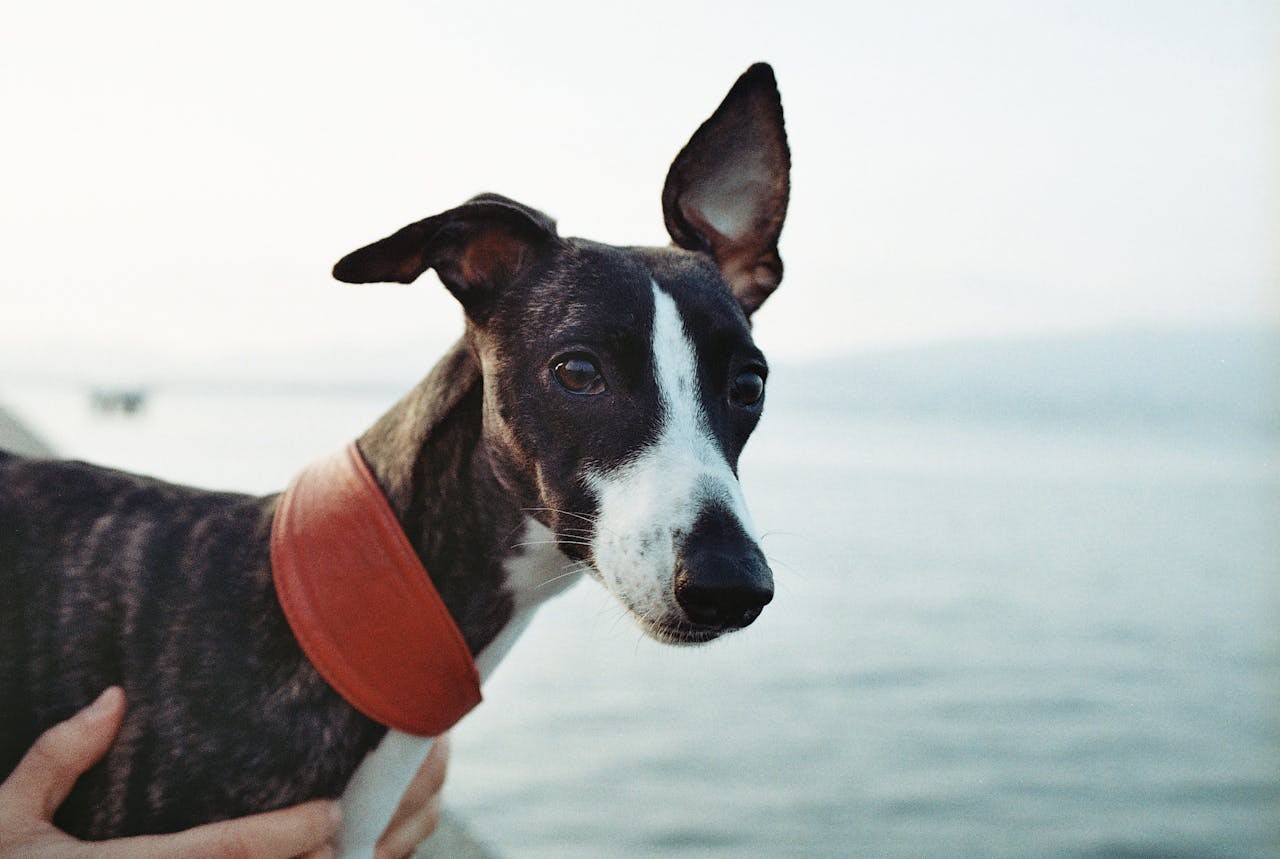
Sighthounds are unlike any other group of dogs. From Greyhounds and Whippets to Salukis, Borzoi, and Italian Greyhounds, these breeds share a distinctive silhouette—long, elegant necks, narrow heads, deep chests, and lean bodies built for speed. Those same traits that make them such breathtaking athletes also mean they have very specific equipment needs, especially when it comes to collars for sighthounds.
One of the most defining characteristics of a sighthound is that their head is often narrower than their neck. In practical terms, this means many standard flat collars can slip off with surprising ease—particularly if a dog startles, pulls backward, or becomes frightened. Add to that their thin skin, low body fat, and overall sensitivity, and it becomes clear that not every collar is suitable for these breeds.
Choosing the right collar for a sighthound isn’t just about style—it’s about safety, comfort, and proper support for their unique anatomy. In this article, we’ll explore the most commonly used types of collars designed specifically with sighthounds in mind, how they function, and when each option may be appropriate. We’ll also include a brief honorary mention of harnesses, which can be an excellent alternative in certain situations.
The Martingale Collar:
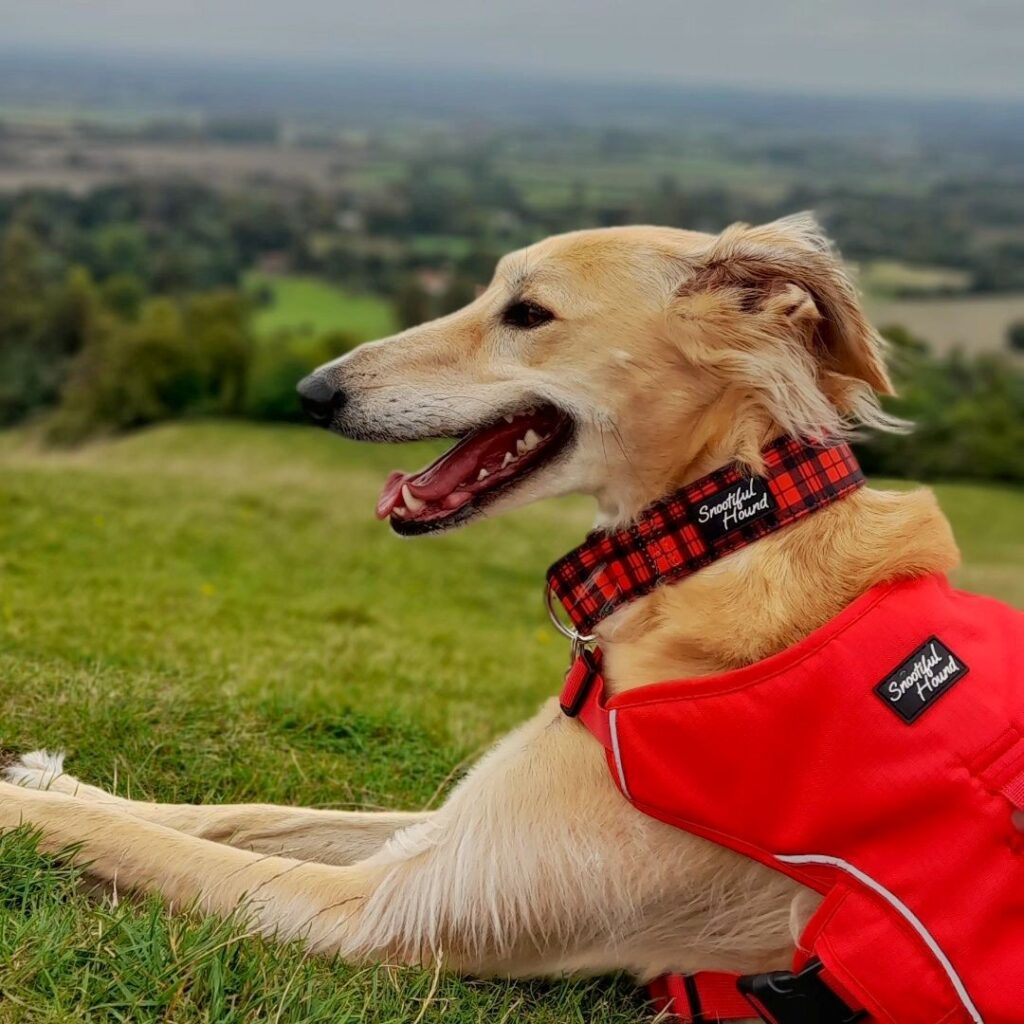
If there is one collar most commonly associated with sighthounds, it is the martingale collar which was specifically designed to address the unique anatomy of breeds whose necks are wider than their heads. For many sighthound owners, it is considered the gold standard for everyday walking.
A martingale collar features two loops. The larger loop sits around the dog’s neck, while the smaller control loop tightens gently when tension is applied to the leash. When the dog pulls or attempts to back out, the collar tightens just enough to prevent escape but not enough to cause discomfort or injury. Unlike a choke chain, it does not continue tightening indefinitely. Once tension is released, the collar loosens again, resting comfortably around the neck.
This design makes the martingale particularly well-suited for sighthounds. Because these breeds can easily slip out of traditional flat collars, the gentle tightening action adds an important layer of security. These collars also tend to be wider than a traditional collar, so it also distributes pressure more evenly around the neck compared to narrower collars, which is beneficial for sighthounds who can accelerate fast, and have thin fragile necks.
Martingales are commonly used for daily walks, leash training, and outings where added control is needed. They are especially valuable for newly adopted sighthounds, who may be more prone to spooking or attempting to back away when startled.
Martingales are commonly used for daily walks, leash training, and outings where added control is needed. They are especially valuable for newly adopted sighthounds, who may be more prone to spooking or attempting to back away when startled.
Leather Fishtail Collars – the traditional choice:
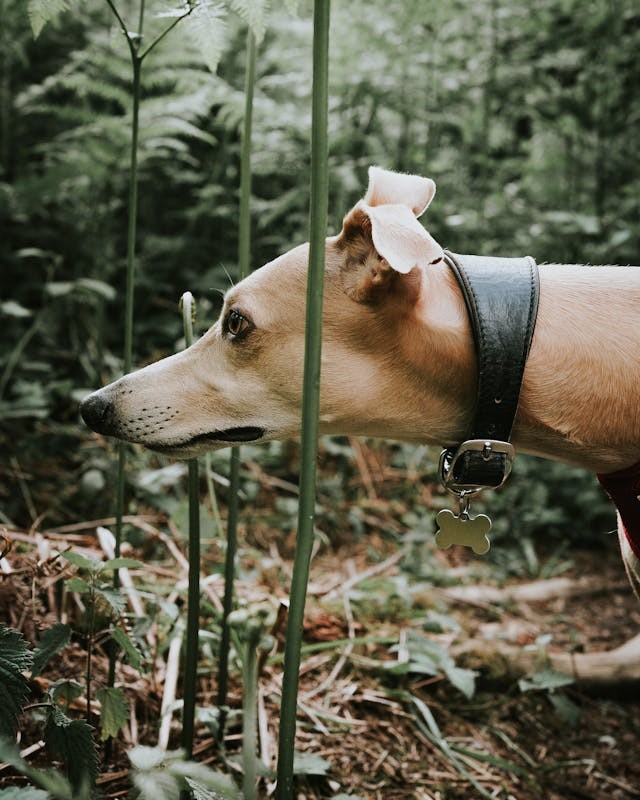
The leather fishtail collar is one of the most iconic pieces of traditional sighthound equipment. Recognisable by its distinctive flared shape—wide across the front of the neck and tapering toward the buckle—it was specifically developed to support the long, slim necks of sighthounds. The widened front section helps distribute pressure across a greater surface area, offering both comfort and structural support where it’s needed most.
Unlike standard straight collars, the fishtail shape follows the natural curve of a sighthound’s neck. The broader front panel helps protect the more delicate cervical area while preventing the collar from digging in during leash pressure. This can be particularly beneficial for dogs with very fine skin or those prone to irritation from narrower designs.
Traditionally crafted from leather, fishtail collars are valued not only for their function but also for their durability and classic aesthetic which is timeless in the sighthound community.
High-quality leather softens and molds slightly to the dog’s neck over time, improving comfort with wear. However, proper fit is essential—these collars should sit comfortably high on the neck without sliding down toward the shoulders. While they offer excellent support and style, fishtail collars are generally best suited for calm walkers who are unlikely to back out of a collar, as they do not provide the same escape resistance as a martingale.
House Collars – an extra layer of protection:
House collars are not designed for walking, but rather for identification in case your hound gets loose. These collars are typically lightweight, minimal in structure, and made from soft materials that can be worn comfortably for extended periods indoors.
For sighthounds, this distinction is especially important. Because they have thin skin and very little natural padding around the neck, constant pressure from a heavier walking collar can sometimes cause irritation or coat wear. A lightweight house collar reduces that risk while still ensuring that ID tags remain attached in case of an unexpected escape which can happen often with sighthounds, especially when travelling.
Many sighthound owners prefer to use a dedicated walking collar, such as a martingale or fishtail, for outings, and switch to a softer tag collar at home which is more comfortable for the dog. House collars are often designed to be unobtrusive—thin leather, soft fabric, or even breakaway styles are common choices.
While they are ideal for holding identification tags, house collars should not be relied upon for leash walking. Used appropriately, however, they provide a practical and gentle way to ensure a sighthound is always wearing proper identification.
Honorary Mention: Harnesses for Sighthounds
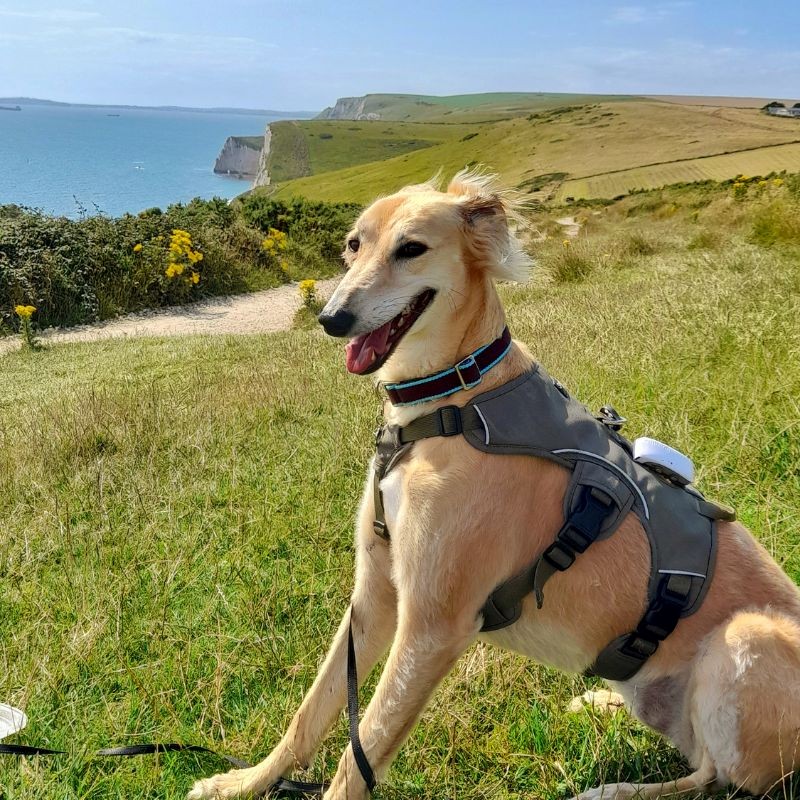
While collars are the traditional choice for many sighthound owners, a good sighthound harness can be an excellent alternative—or complement—depending on the individual dog. Because sighthounds have long, delicate necks and relatively little body fat, some owners prefer to reduce or eliminate leash pressure on the neck altogether. In certain situations, a properly fitted harness may provide added safety and comfort.
However, if choosing a harness, fit and design are absolutely critical. A poorly fitted harness, or one that overlooks the unique needs of a sighthound, can restrict shoulder movement, rub against sensitive skin, or even allow a determined sighthound to escape.
For deep-chested breeds, three-point (often called escape proof) harnesses are especially popular. These designs include an additional strap that sits behind the ribcage, making it much harder for a dog to back out.
Other important considerations is to get one with a Y-shaped chest piece and padding in the appropriate places to reduce rubbing and to avoid restricting movement.
Conclusion:
Sighthounds are beautifully unique dogs, and their equipment should reflect that. Their narrow heads, long necks, deep chests, and sensitivity make proper collar selection more than just a matter of preference—it’s a matter of safety and comfort.
For many owners, the martingale remains the go-to choice for secure everyday walks, offering gentle control while helping to prevent escapes. Leather fishtail collars provide traditional support and elegant structure, distributing pressure across the neck in a way that suits the sighthound’s unique anatomy. House collars serve a different but equally important role, ensuring identification without unnecessary weight or irritation during downtime at home if you’re worried about your hound getting out unexpectedly. Harnesses, when properly fitted, can offer an excellent alternative in situations where reducing neck pressure or increasing security is a priority, and also allow for safe travel in a car.
There is no single “perfect” option for every dog. The right choice depends on your sighthound’s temperament, training, physical sensitivity, and lifestyle. By understanding how each type of collar—or harness—functions, you can make an informed decision that prioritises both safety and comfort.
